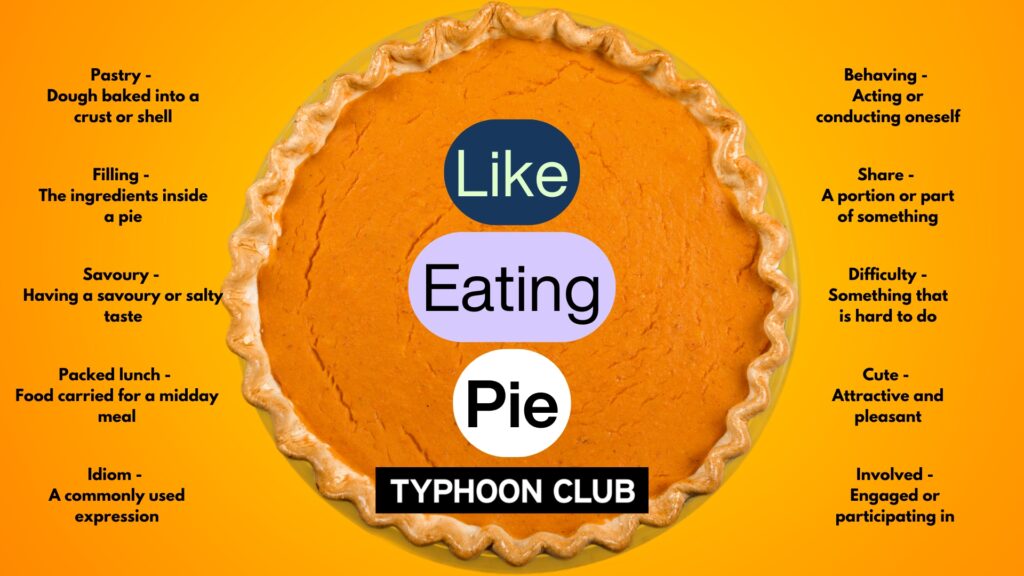
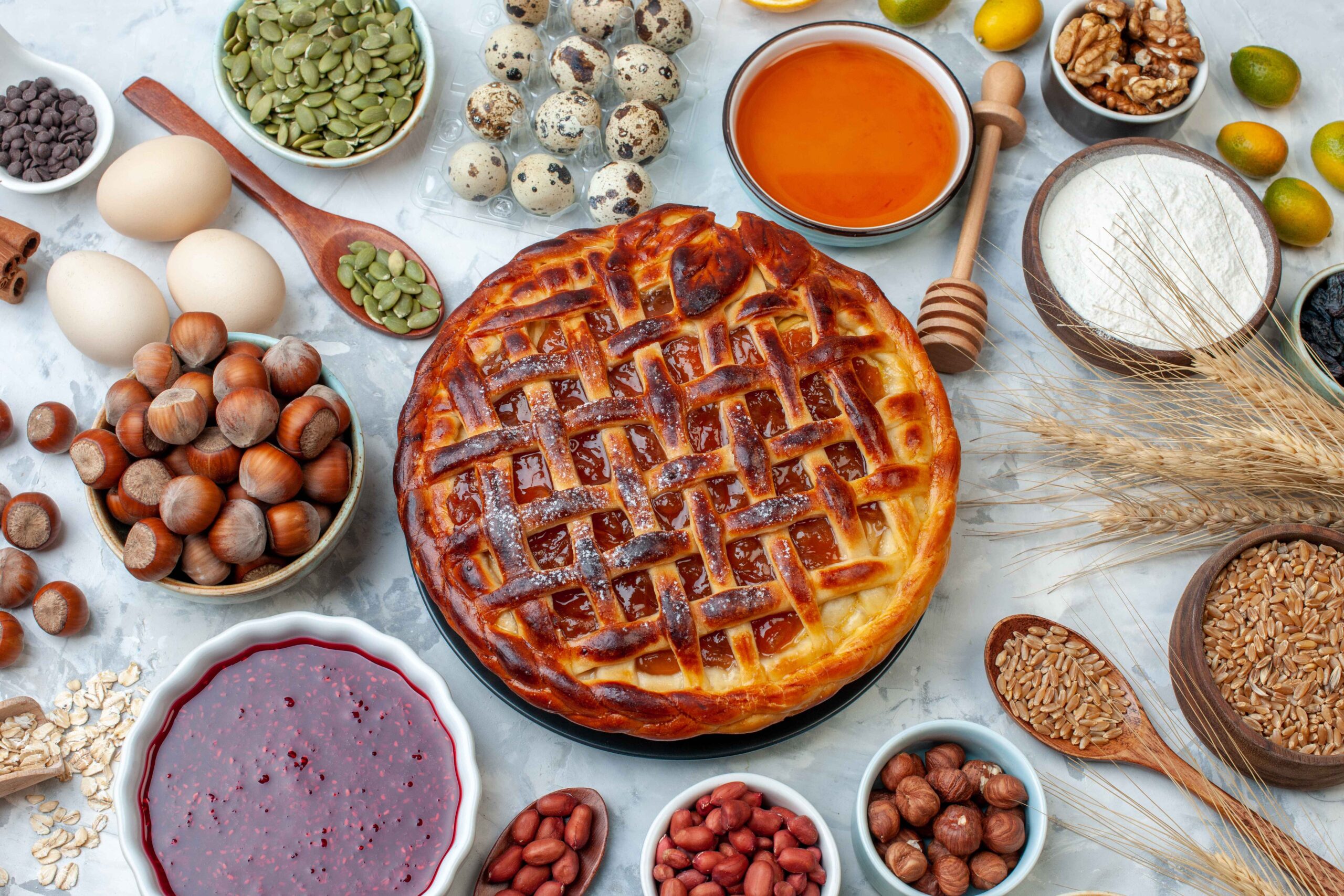
We all know what a pie looks like. On the outside there is usually pastry. The pastry holds or hides an inside filling which may be sweet like apple or pumpkin, or savoury such as meat or vegetables. Pies have been made for thousands of years. They were once a useful way of carrying a packed lunch – before the lunchbox was invented. Sometimes, the outside pastry was not eaten. It was there simply to protect the inside bit – the delicious and tasty part. Whether you like pies or not, they have somehow found a way into the English language and form part of some well-used and popular idioms. Let’s take a look.
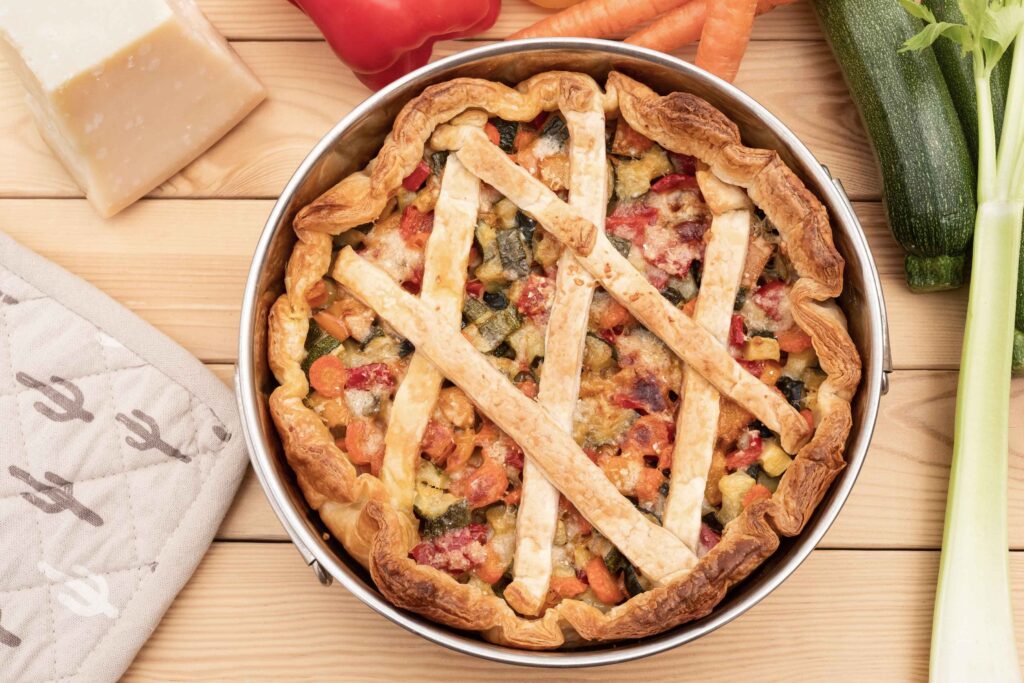
As nice as pie. Behaving very well towards someone – especially when that person is not expecting it. I complained to the school principal about the new school rules. She was as nice as pie about it.
A piece of the pie. A share in something. That business idea sounds fantastic. I certainly want a piece of the pie.
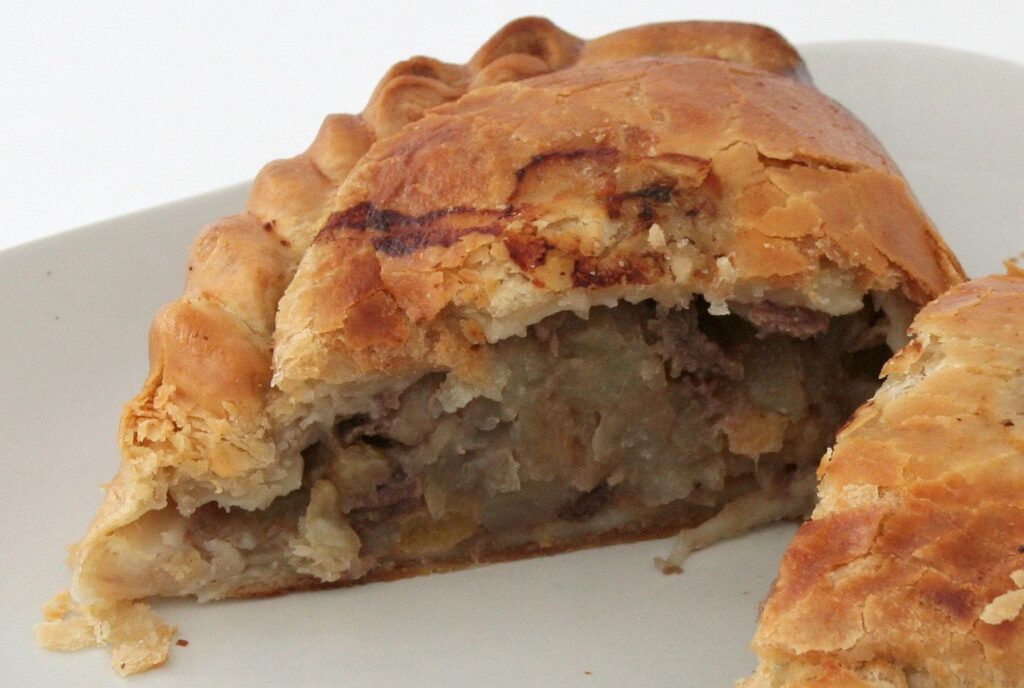

As easy as pie. Something that can be done with little or no difficulty. Catching the bus to school on my own is as easy as pie.
Cutie-pie. Referring to someone who looks cute. When your daughter is dressed as The Little Mermaid, she’s a real cutie-pie.


A finger in every pie. To be involved in many different activities. That businessman has a finger in every pie.
Ate humble pie. To apologise for something that causes embarrassment. The teacher ate humble pie when he saw how many spelling mistakes there were in his report.


Pie in the sky. An idea that is great, but will never happen. Me, top in maths? That’s pie in the sky!
Here’s a longer explanation of the English idiom, eat humble pie:
QUESTION:
VOCABULARY: