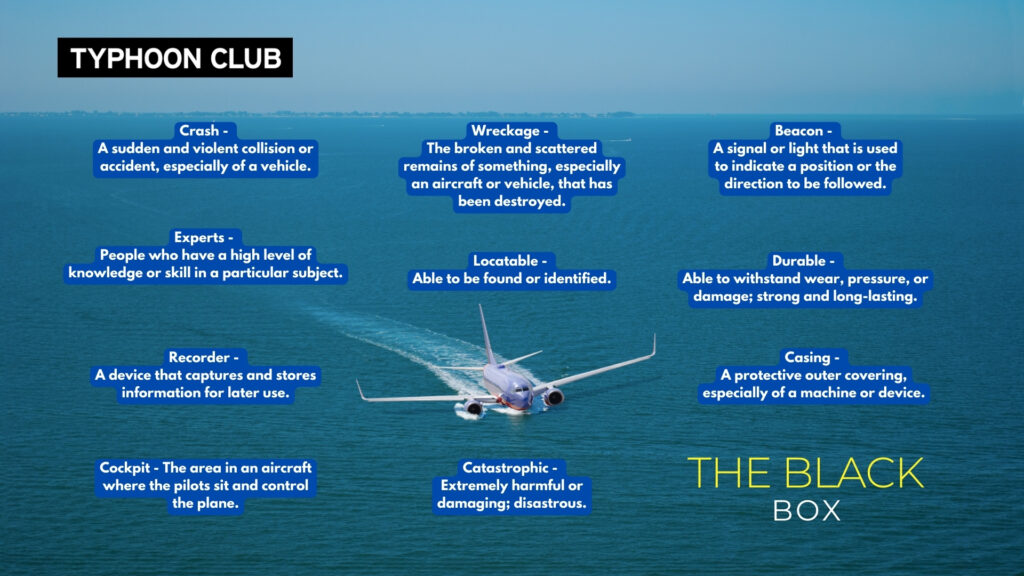

When an aircraft crashes, one of the first things the experts look for is something known as the ‘Black Box’. An aircraft’s black box contains important information that may help explain what actually happened before the crash occurred. Here is some background information about the Black Box.
The Black Box comes in two parts: The Flight Data Recorder (FDR) and a Cockpit Voice Recorder (CVR). Every commercial aircraft has to carry both, and they are usually placed at the back of the aircraft, where they are more likely to survive a crash.
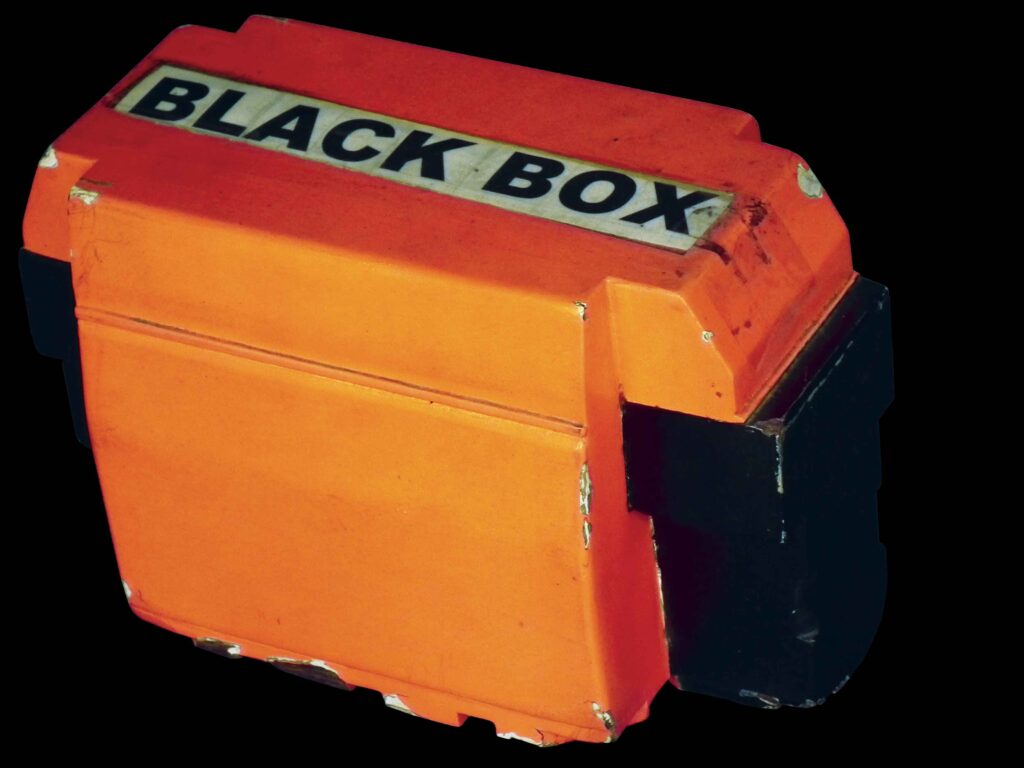
Even though it is called a Black Box, it is not black (see left). It is orange because orange is an easier colour to see, making it more easily locatable in the wreckage of a crash site. Experts do not actually call it a Black Box; the proper term is an Electronic Flight Data Recorder.
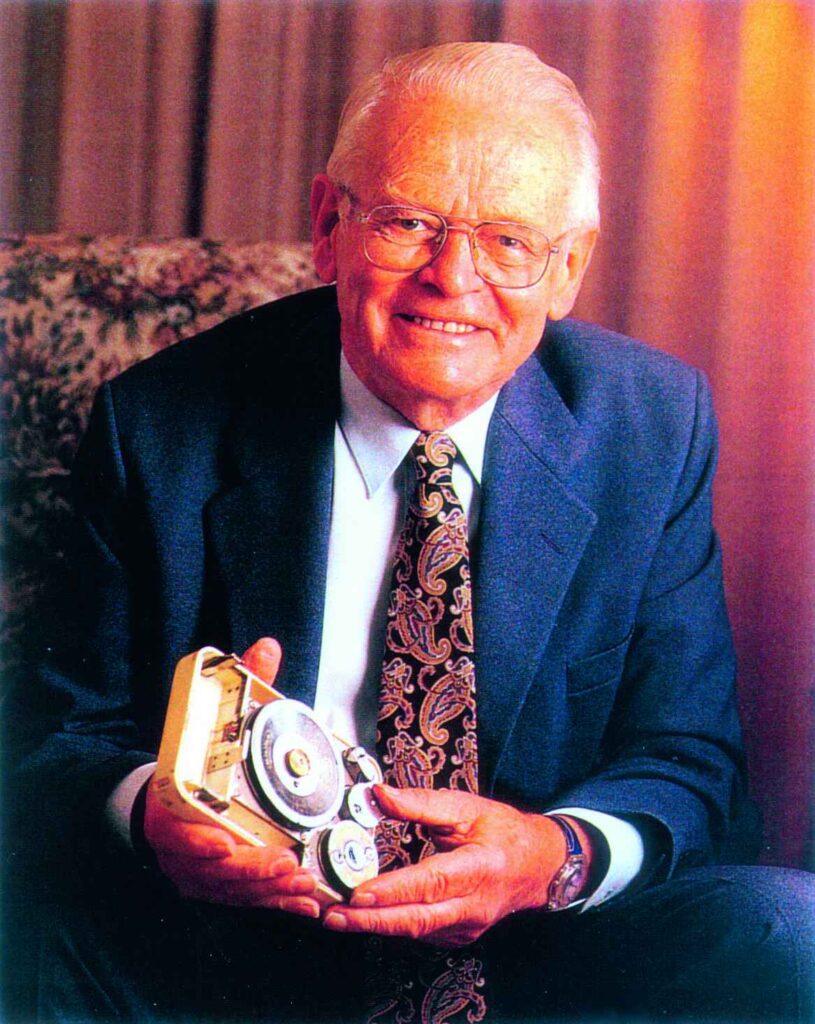
The Black Box was invented in 1956 by an Australian man named Dr. David Warren right). He came up with the idea after his father was killed in an air crash, and he wanted to find a way to gather more information about what had happened.
The CVR part of a Black Box records up to two hours of conversation from the cockpit, where the pilots fly the plane. The FDR section records up to 25 hours of critical flight information, such as the aircraft’s speed, altitude, heading, and engine performance data.
Every Black Box includes an underwater locator beacon that begins sending a distress signal as soon as it touches water. This beacon can work in water up to four kilometres deep, and the signal can be transmitted for about 30 days after a crash before the beacon’s battery runs out.
Each Black Box is usually wrapped in a durable metal casing, often made of titanium or stainless steel. This makes them almost indestructible, able to withstand the extreme forces and heat of a plane crash. In fact, Black Boxes have been known to survive even the most catastrophic accidents.
In recent years, new and improved versions of the Black Box have been developed. One innovative design works like an MP3 player, with the ability to record up to 500 hours of data from the aircraft, including not just flight parameters but also cockpit conversations, intercom communications, and even ambient sounds in the cabin. This expanded data capacity can provide investigators with a much richer set of information to work with when analysing an accident.
As air travel continues to grow worldwide, the importance of the Black Box in accident investigations remains paramount. These resilient, high-tech data recorders have proven invaluable in helping to uncover the causes of plane crashes and improve aviation safety for the future.
How Does a Black Box Work?
QUESTION:
VOCABULARY: