Doctors and medical experts are always telling us about the importance of exercise. If we want to live a long and healthy life, we have to make a commitment to exercise. With our busy schedules, it is often difficult. Some of us choose to go on regular walks or runs in the park and countryside. Others choose to go to the gym, where they will surely spend a few minutes running on a treadmill. We all know what a treadmill looks like and what it feels like to use, but you may be surprised at its history.

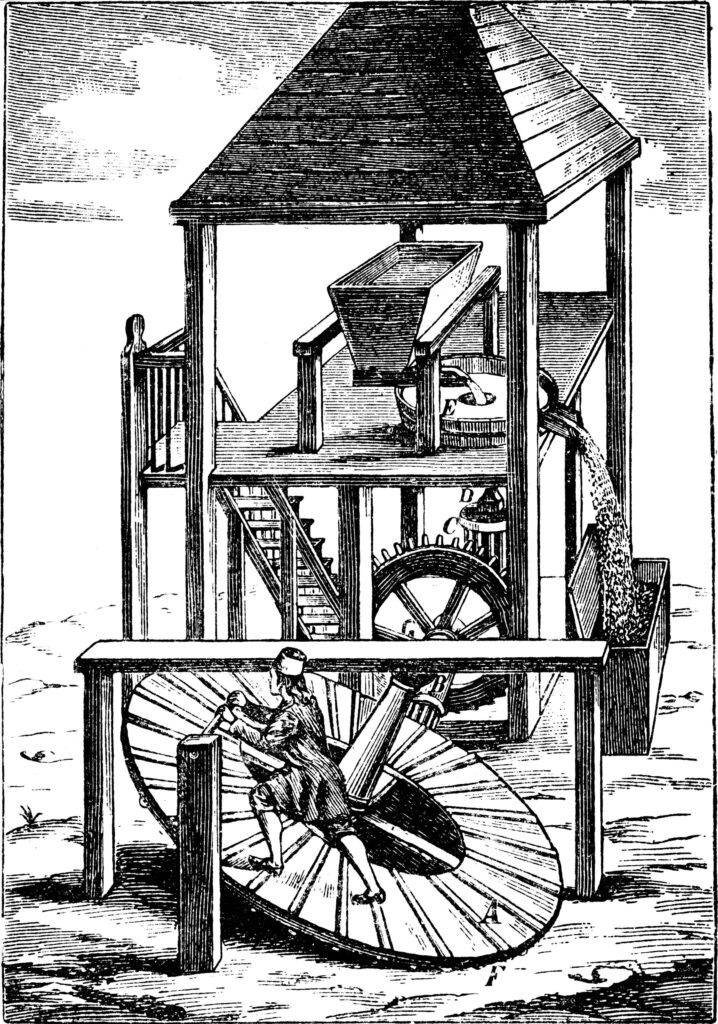
Treadmills in one form or another have been around for thousands of years. Long before they were ‘must-have’ pieces of gym equipment, the Romans were using them to help lift heavy weights. Treadmills were also used on farms and were operated either by humans or animals. It was not until machinery operated by fossil fuels was invented that the treadmill in the workplace became redundant.
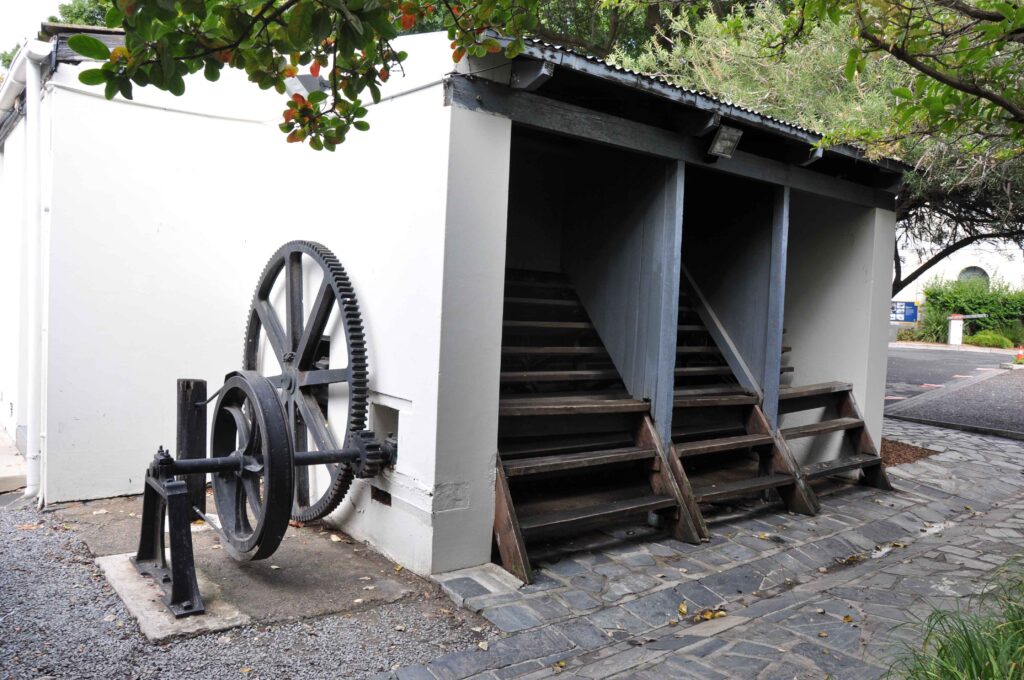
The image on the left is a treadmill used for grinding grain. It looks like hard work!
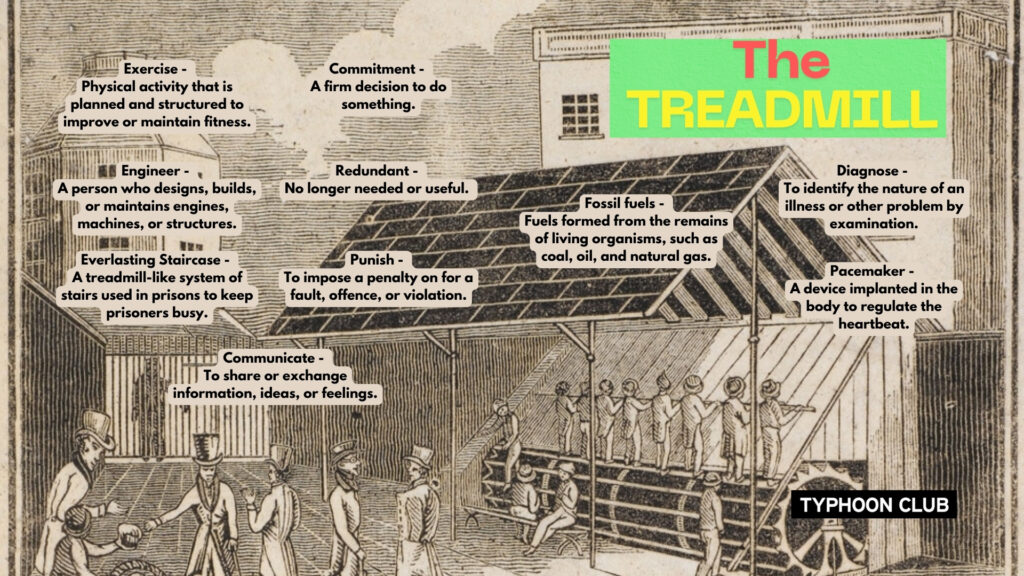
The most surprising thing about the treadmill though was a design by a man called William Cubitt. Cubitt was the son of a miller so he was familiar with how treadmills could be used within the workplace. When he grew up, he became an engineer. In 1818, he put his engineering skills to work and invented something that was later called the Everlasting Staircase. It was a system of stairs, like a treadmill, that could be used in prisons to keep prisoners busy and out of trouble.
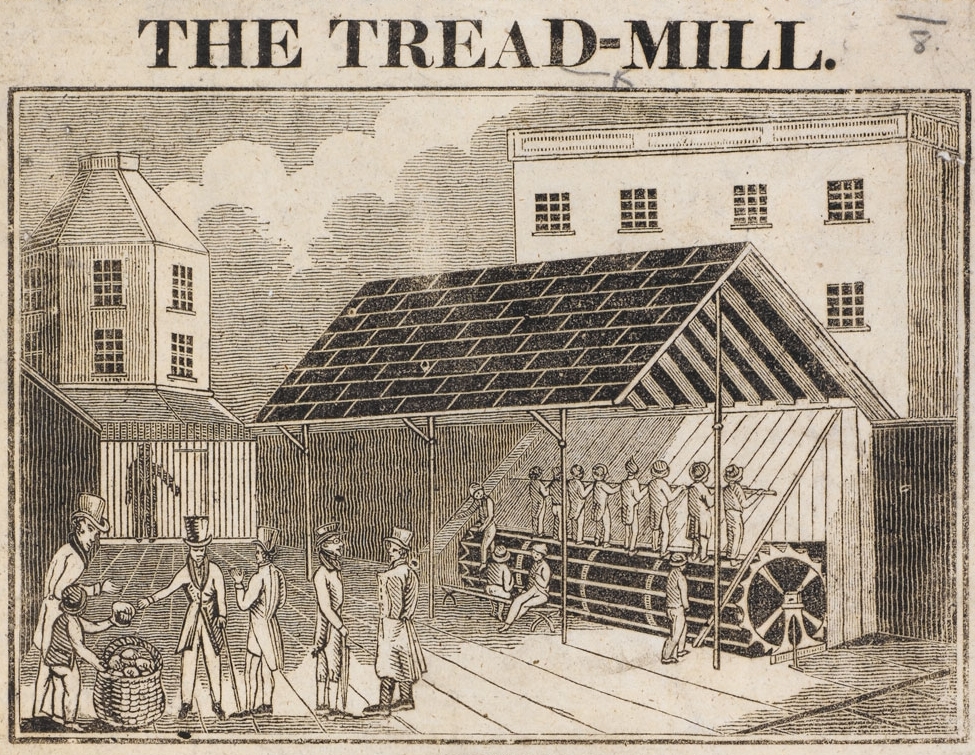
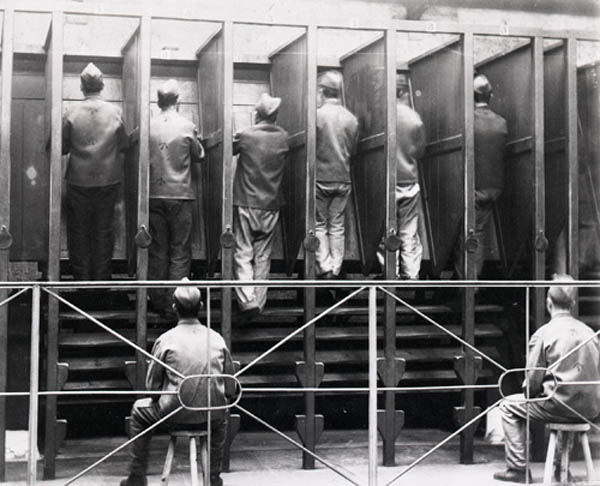
Prisoners were made to climb the stairs for up to eight hours each day. Sometimes the energy created by their physical work was used to pump water or grind grain. Usually, it was there just to punish prisoners. Sometimes, prisoners would make about 10,000 steps in one day!
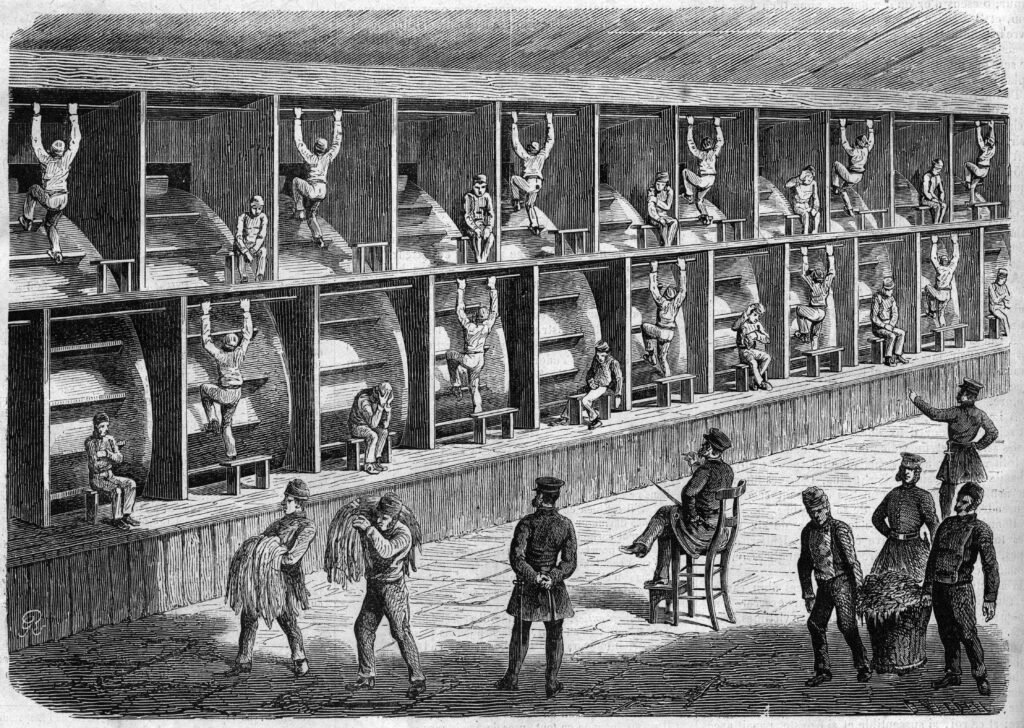
At first prisoners were able to talk to one another as they used the Everlasting Staircase. This was soon considered to be too easy. Screens were placed between each prisoner so they could not see or speak to one another.
William Cubitt’s machine was used in hundreds of prisons around the world. One was even ordered for Victoria Gaol in Hong Kong. However, the prisoners hated it. It was not so much the exercise they disliked, it was not being able to communicate with anyone that they really despised. In 1898, prisons stopped using the Everlasting Staircase. It was considered to be too cruel.
As we all know, that was not the end of the treadmill. Fifty-odd years later in 1952, Dr. Robert Bruce developed a treadmill that could help diagnose heart and lung disease. In 1968, William Staub read about how exercise could improve our health. He invented the Pacemaker 600, the first home-use treadmill. A whole new industry was born.
A great timeline of the treadmill:
QUESTION:

VOCABULARY: