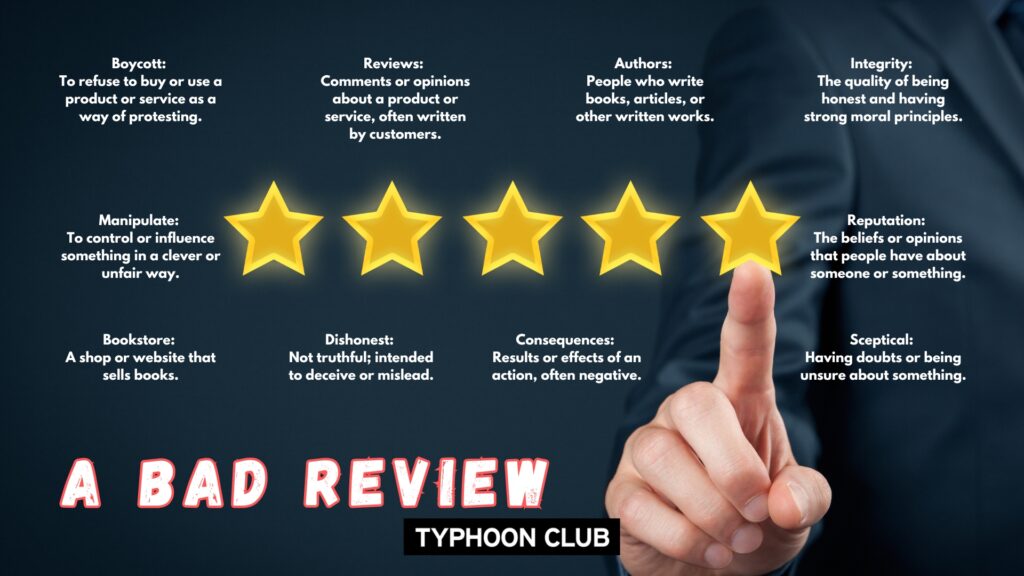

Amazon.com is the world’s largest online bookstore. It’s incredibly easy to search for a book you want to read from the comfort of your home, and you can have it delivered or sent electronically without any hassle. Reading reviews left by other readers on the site is also very helpful. In today’s connected world, it’s exciting to see opinions from people all over the globe.
Unfortunately, some individuals have misused this service. Recently, it was revealed that several well-known authors have written reviews online under fake names. R.J. Ellory, a famous British author known for his mystery novels, admitted to writing glowing reviews of his own books, describing them as brilliant. While no one likes to see others boast about their work, it is far worse—and dishonest—when they do so while pretending to be someone else.
Mr. Ellory didn’t just write positive reviews for his own books. He also left harsh reviews for books by other authors, giving them the lowest possible rating of one out of five stars. In another case, a different well-known author even admitted to making hurtful comments about other writers’ appearances on their pages. This kind of behaviour is not just unethical; it undermines the trust readers have in reviews.
When students say unkind and dishonest things about others, they often face consequences from teachers or parents. This raises the question: how can readers respond to these popular authors? Should they stop reading their books altogether?

Many readers feel betrayed when they discover that authors manipulate reviews. Trust is essential in the world of literature, and when authors deceive their audience, it damages their reputation. Some readers may choose to boycott these authors, while others might continue to read their work but feel sceptical about its quality.
Ultimately, it’s important for readers to approach book reviews with a critical eye. They should consider multiple opinions and remember that not all reviews are genuine. By doing so, readers can make informed choices about what to read and hold authors accountable for their actions. In a world where honesty is crucial, it’s vital to support integrity in literature and ensure that readers can trust the reviews they rely on.
New York Times non-fiction book critic, Jennifer Szalai, provides advice on how to write a good book review.
QUESTION:
VOCABULARY: