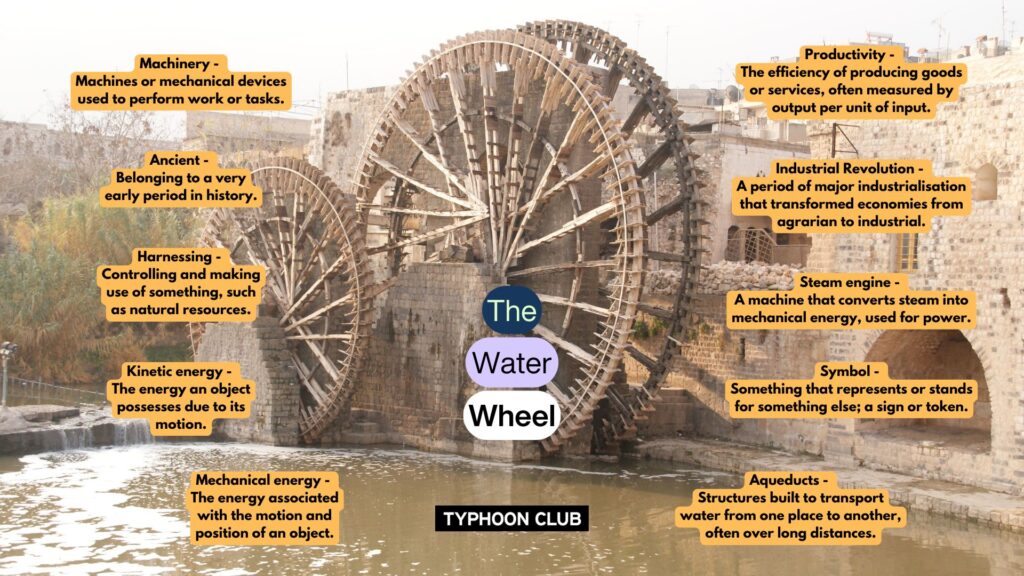
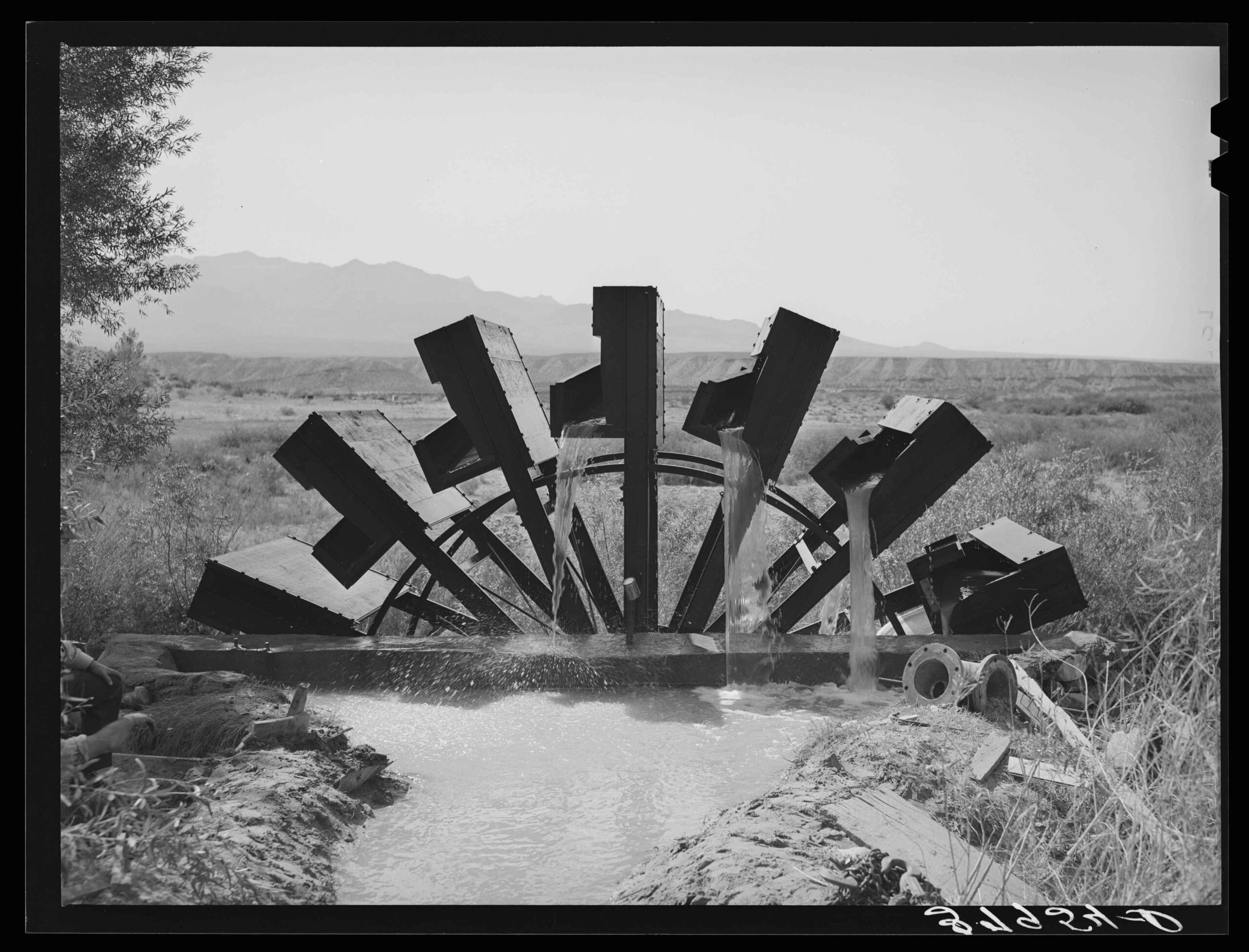
The water wheel is one of the earliest forms of machinery invented by humans, dating back to ancient times. Its creation marked a significant advancement in harnessing natural resources for human use. The earliest evidence of water wheels can be traced to ancient Mesopotamia around 3000 BC, where they were used for grinding grain.
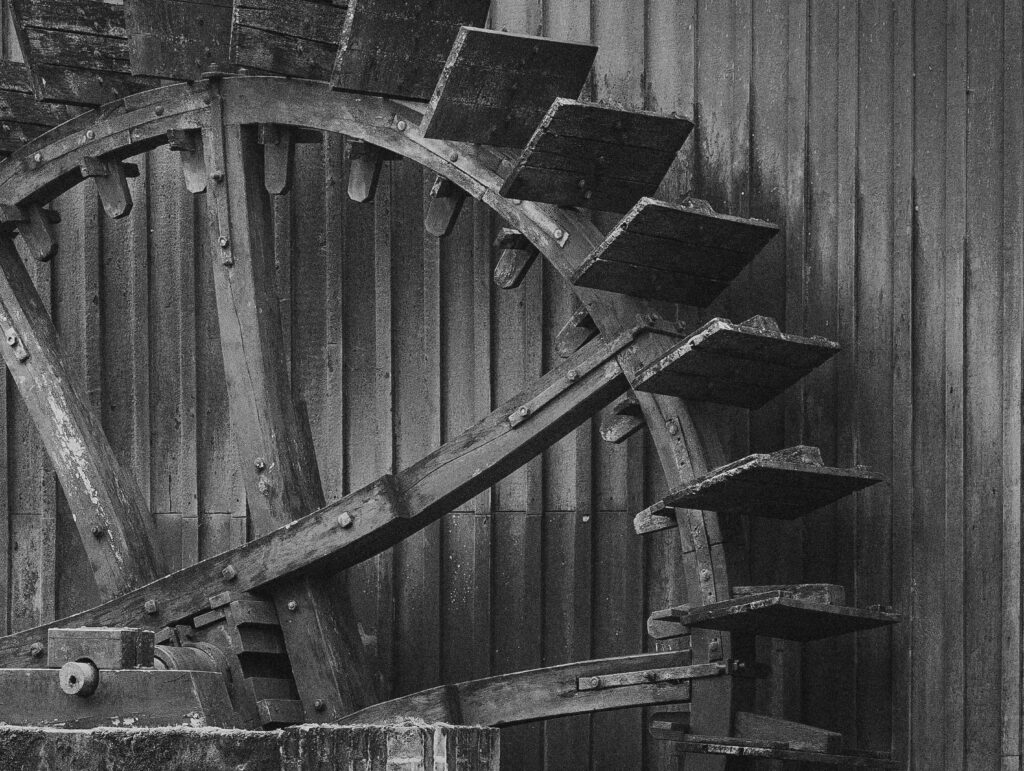
The design of the water wheel is simple yet effective. It consists of a large wheel mounted on a horizontal axle, with blades or buckets attached to its rim. When water flows over or into these buckets, it turns the wheel, converting the kinetic energy of flowing water into mechanical energy. This energy could then be used to perform various tasks, such as grinding grain, lifting water, or powering simple machinery.
In ancient Greece, the water wheel gained popularity and was further developed. The Greeks used it for milling grain and saw milling, increasing efficiency in food production and timber processing. The Romans also adopted the water wheel, constructing elaborate systems of aqueducts to direct water flow to their mills. This innovation dramatically improved agricultural productivity and supported the growth of cities.
As societies advanced, so did the uses of water wheels. During the Middle Ages, they became essential in Europe for powering various industries, including textile production and metalworking. The water wheel allowed for greater efficiency and output in these industries, laying the groundwork for the Industrial Revolution.
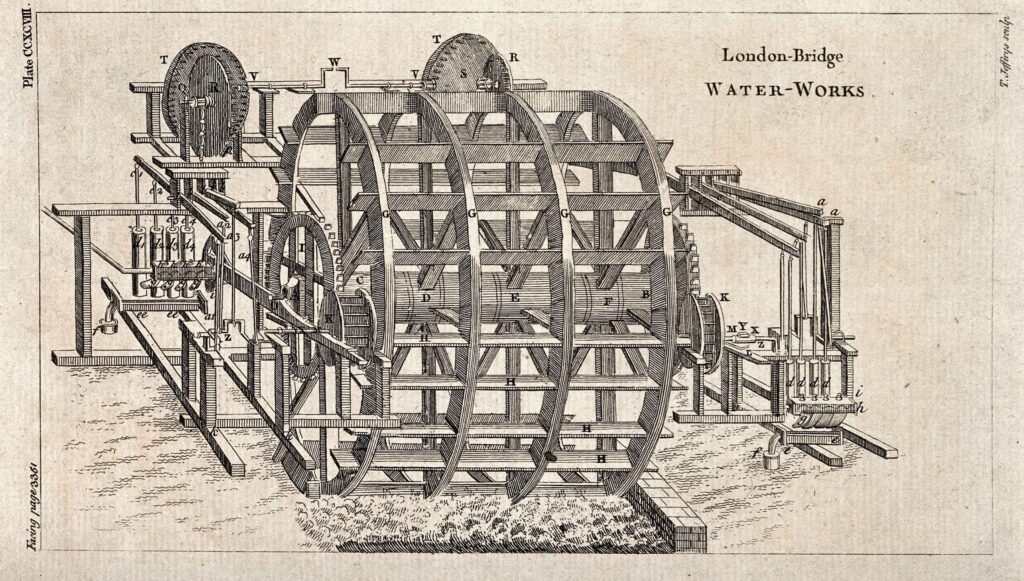
However, as technology progressed, the water wheel began to be overshadowed by more advanced machinery. The steam engine, invented in the 18th century, provided a more reliable and powerful source of energy. Unlike the water wheel, which depended on a constant water source, steam engines could operate anywhere and at any time. This flexibility made them a more attractive option for industries, leading to a decline in the use of water wheels.
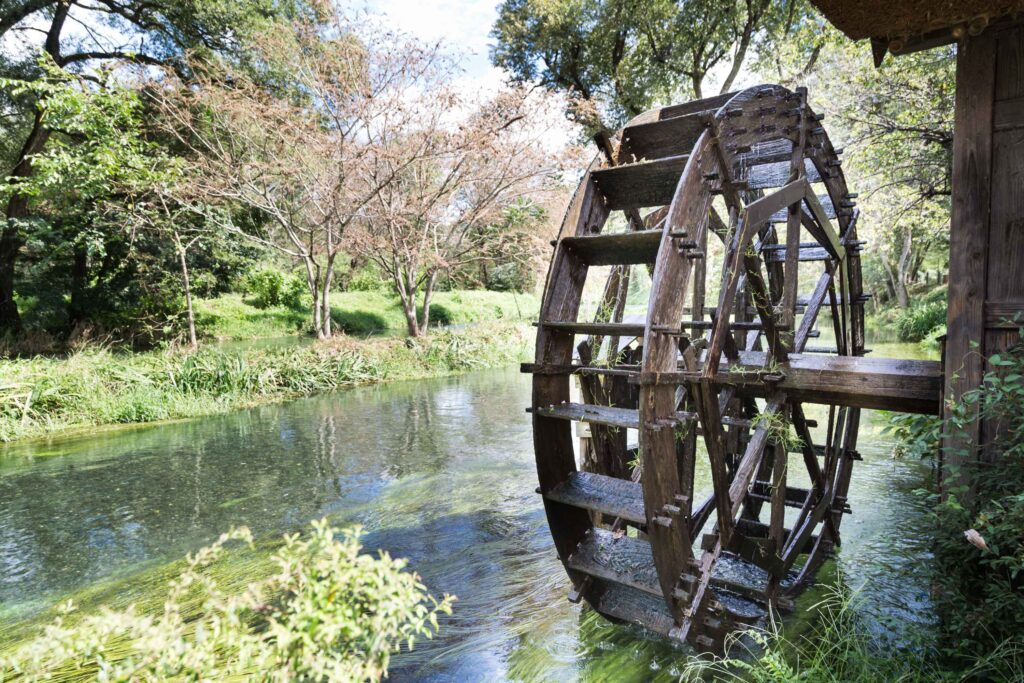
Despite its decline, the water wheel remains an important symbol of human ingenuity. Its principles of harnessing natural power laid the foundation for future innovations in energy conversion. Today, while modern technology has largely replaced the water wheel, it is still used in some rural areas and is celebrated for its historical significance. Old waterwheels also offer great photo opportunities in rural and urban areas!
Here’s a more detailed explanation on how waterwheels work:
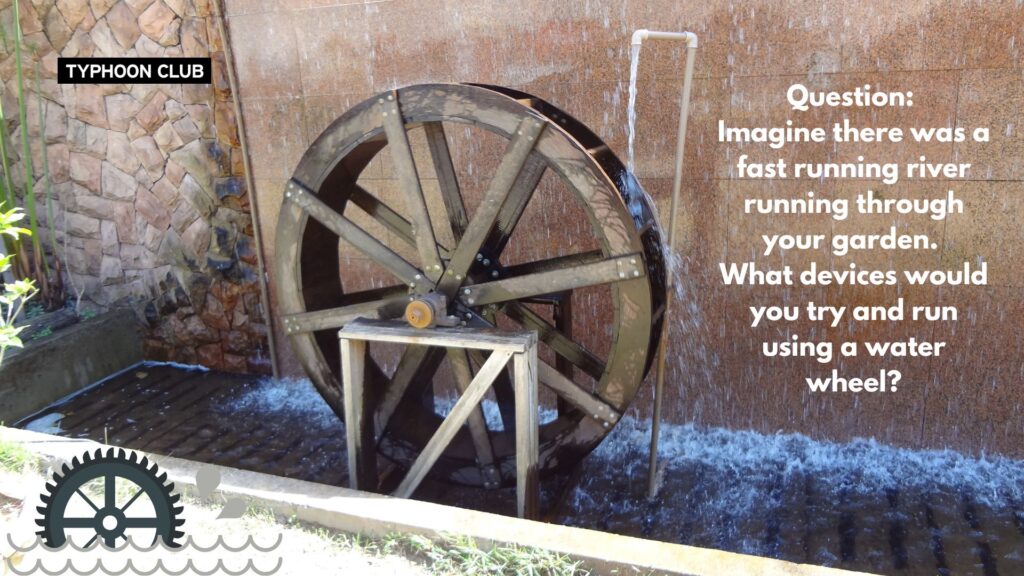
QUESTION:
VOCABULARY: