Did You Know?
There have been 560 occasions when ships have hit icebergs since the year 1810 – including the Titanic!
The largest iceberg in the northern hemisphere was spotted off Baffin Island in 1882. It was 13 kilometres long, 6 kilometres wide and 20 metres high. Icebergs from Antarctica can be many times larger.
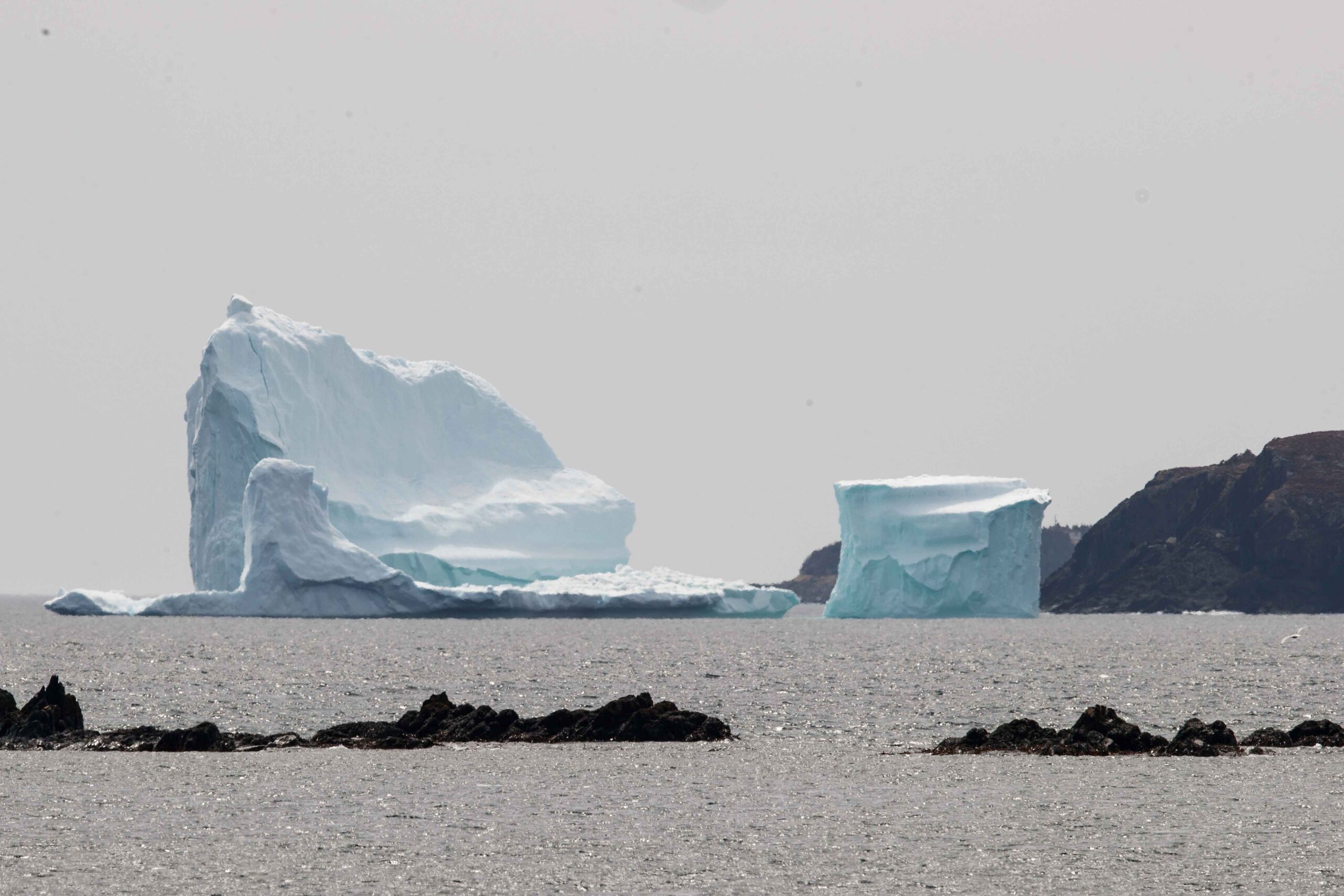
If the heat is getting too much for you this summer and you feel like cooling down, it may be a good idea to head over to the east coast of Newfoundland and Labrador, the most eastern province of Canada. If you are lucky, you will be able to look out to sea and enjoy an amazing view. From May to September, icebergs float past the coast and into the North Atlantic Ocean. This year there have been over 600 icebergs. Last year, there were 687!
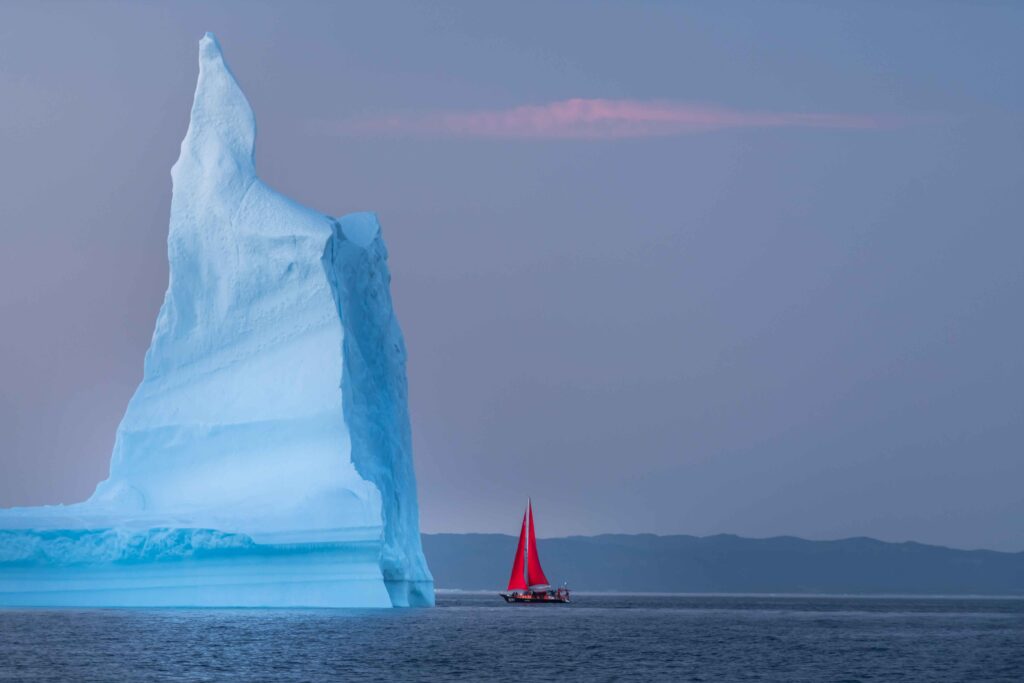
The icebergs originate from glaciers formed on the western coast of Greenland. Over thousands of years, snow has built up and turned into ice. Ever so slowly, the ice creeps towards the ocean. Once there, some of the ice breaks and falls into the sea, forming an iceberg. Every year about 40,000 medium to large icebergs break off into the sea from Greenland glaciers. They hit the water and slowly move southward.
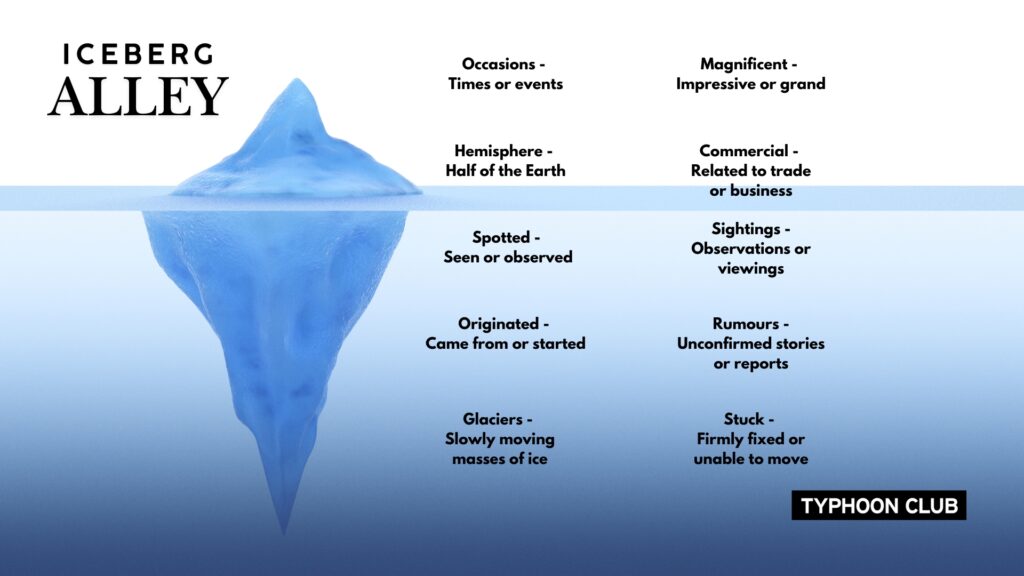
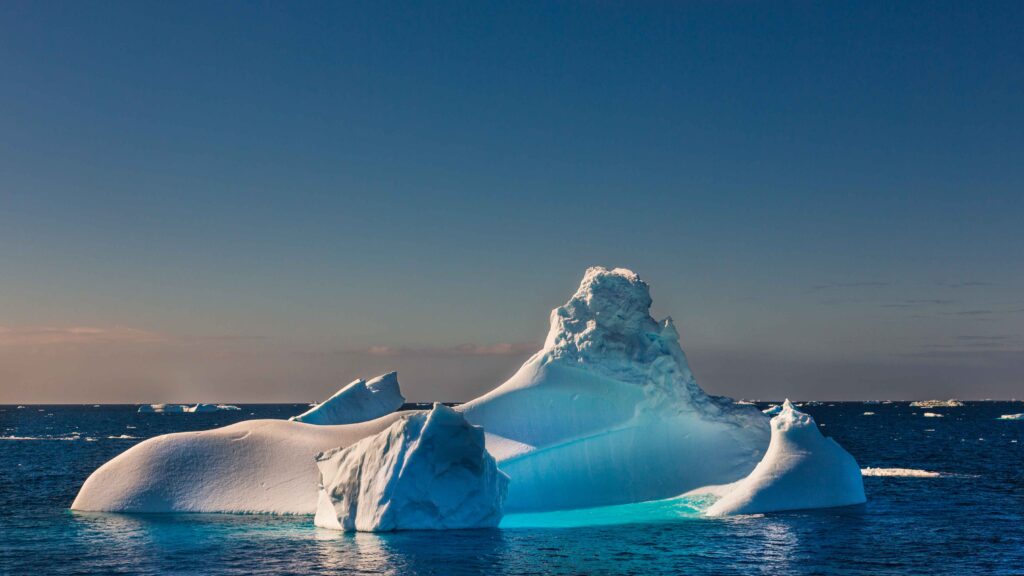
Because they began as snow, the ice is made from pure water. Some of the icebergs are over 10,000 years old. Almost 90 percent of the iceberg is below the water, yet it still looks huge and magnificent as it drifts along in the sea, following the currents. Some icebergs are so large they get stuck on the bottom of the ocean bed. Sometimes, they drag along the bottom for several kilometres. As the weather warms up, the icebergs begin to melt. Very few last longer than 12 months once they have broken away from the glacier.
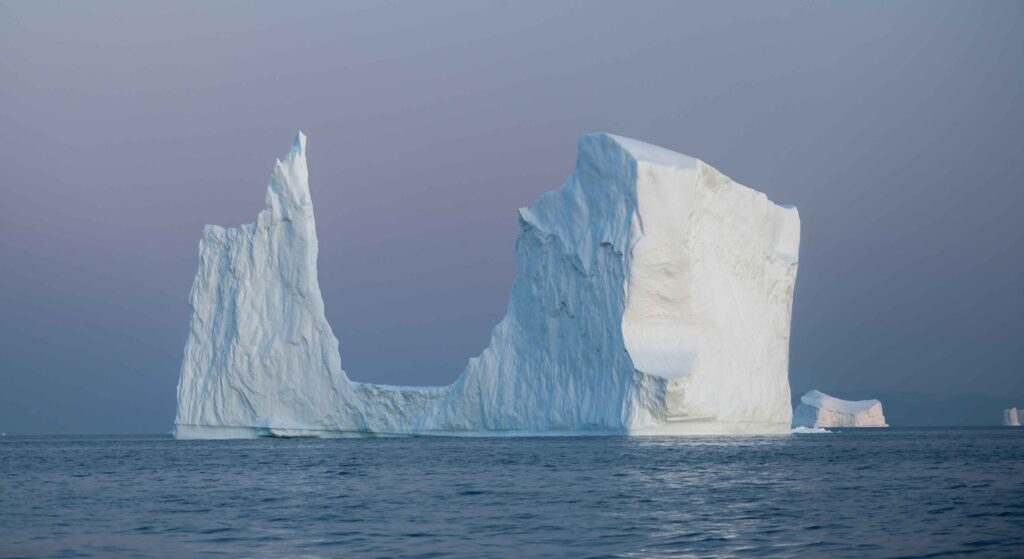
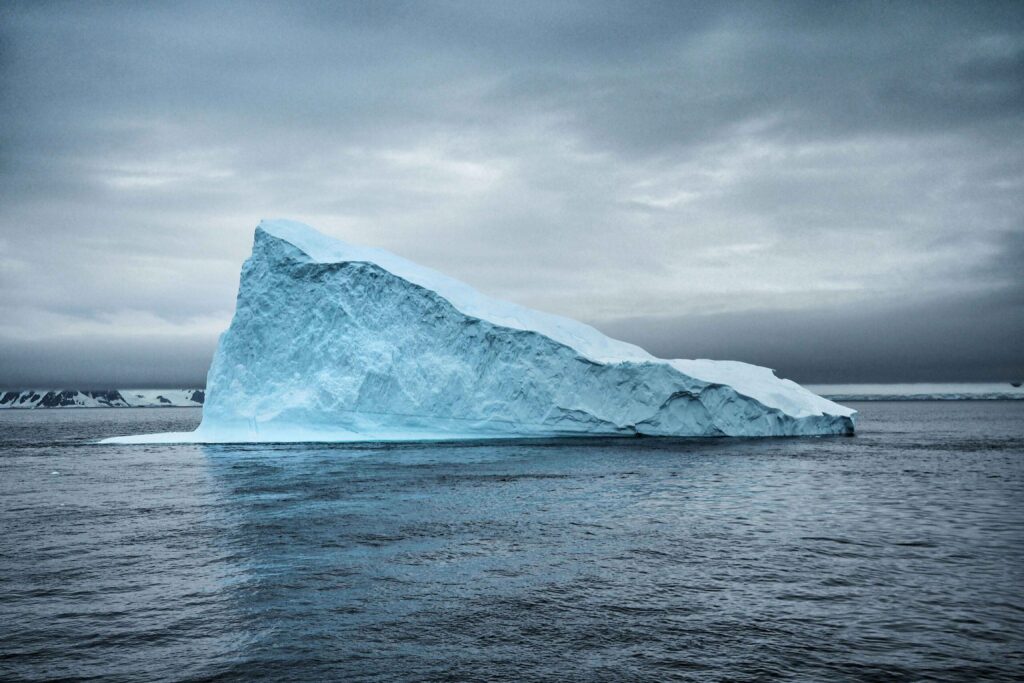
Because of this annual occurrence, the area from Baffin Bay on the south-western coast of Greenland down to Newfoundland and Labrador is known as Iceberg Alley. Icebergs can float into commercial shipping areas and become a danger. There are dedicated websites where people can register sightings of icebergs. Ships can monitor the websites to help ensure they do not sail into an iceberg.
This year, one particular iceberg 45 meters high has attracted a larger than usual number of tourists. What’s more, there are rumours that some icebergs that are still on their way to Iceberg Alley are much bigger than usual. What a way to spend your summer, tracking and watching the icebergs!
This is a TV commercial that promotes Ice Berg Alley as a tourist destination. After reading this article and watching the commercial, would you be tempted to go there?
QUESTION:

VOCABULARY: