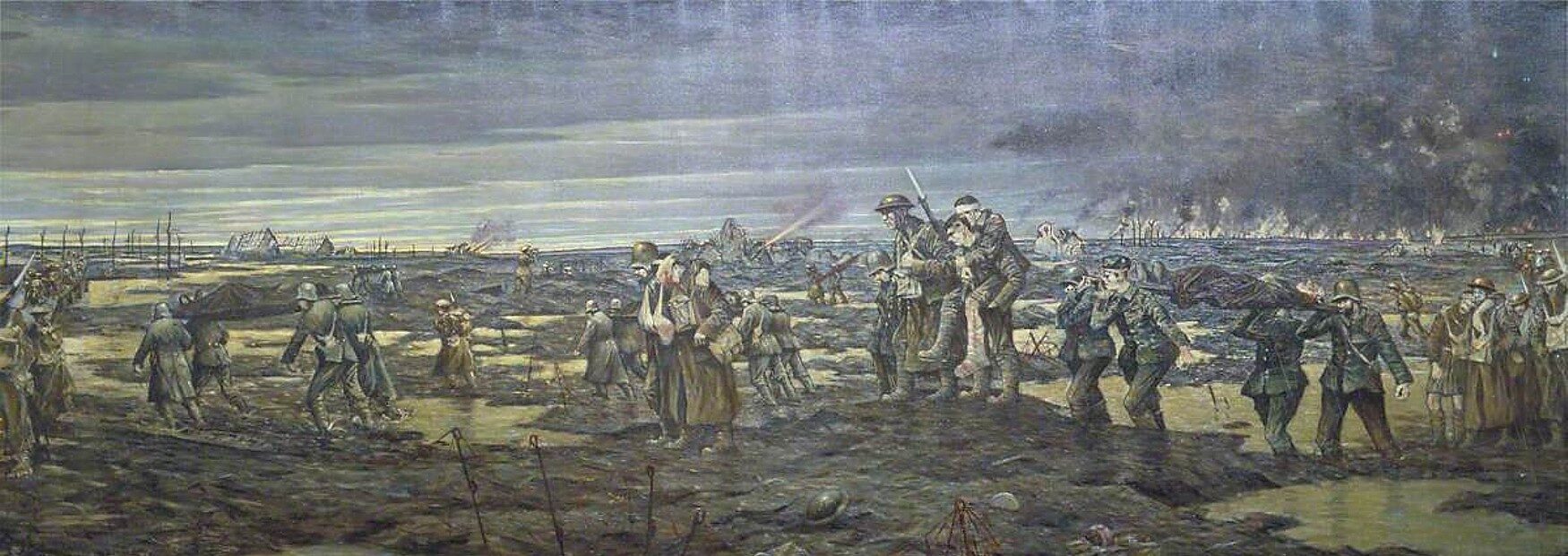
We all have different opinions about art, however famous or expensive the paintings may be. One hundred years ago, a new style of art began appearing in art exhibitions and galleries. As the 100th anniversary of the First World War was remembered recently, let’s take a look at the artwork that brought the reality of war to people left at home.
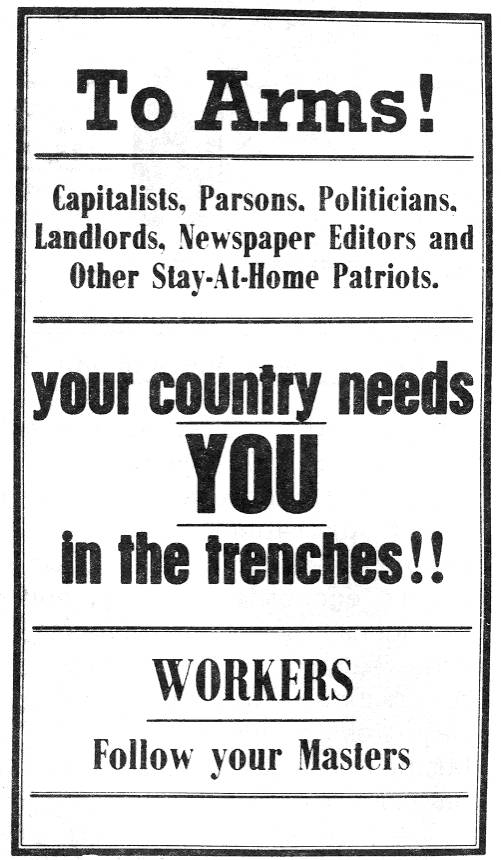
The First World War lasted four years and over eight million men were killed in action. Following the start of the war, thousands of young, patriotic men wanted to serve their country and join the fighting. This was the first ‘industrial war’ where machinery replaced horses and modern science was used to help destroy armies.
Machine guns, submarines and aeroplanes were all used for the first time, all causing death and destruction. The use of gas on the battlefield also had tragic results.
In 1916, two years after the war began, a small group of artists was employed to paint scenes from the battlefields. Until that point, many people left at home had no idea what terrible things were happening. Many of the artists were horrified at what they saw and, through their art, wanted to show how shocking this war really was.
Take a look at some of the paintings from this period. Do the artists’ paintings show just how terrible the First World War really was?
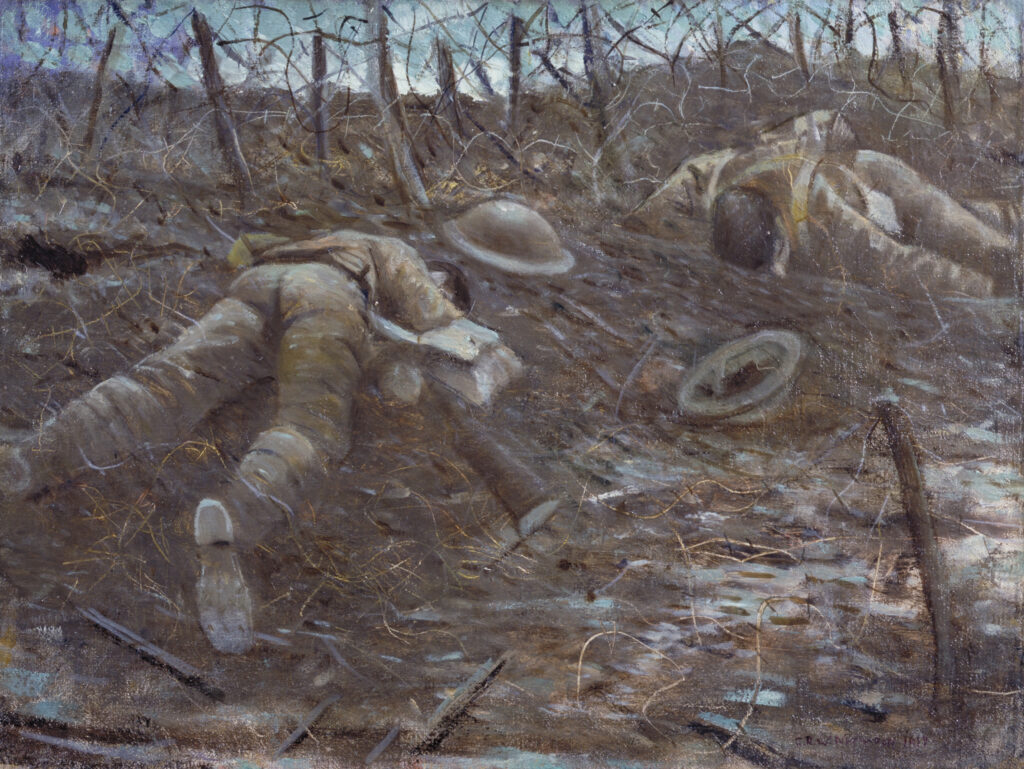
Huge amounts of barbed wire were used to prevent movement, which had deadly consequences. When this painting was first displayed, paper with the word ‘censored’ was used to cover the dead bodies.
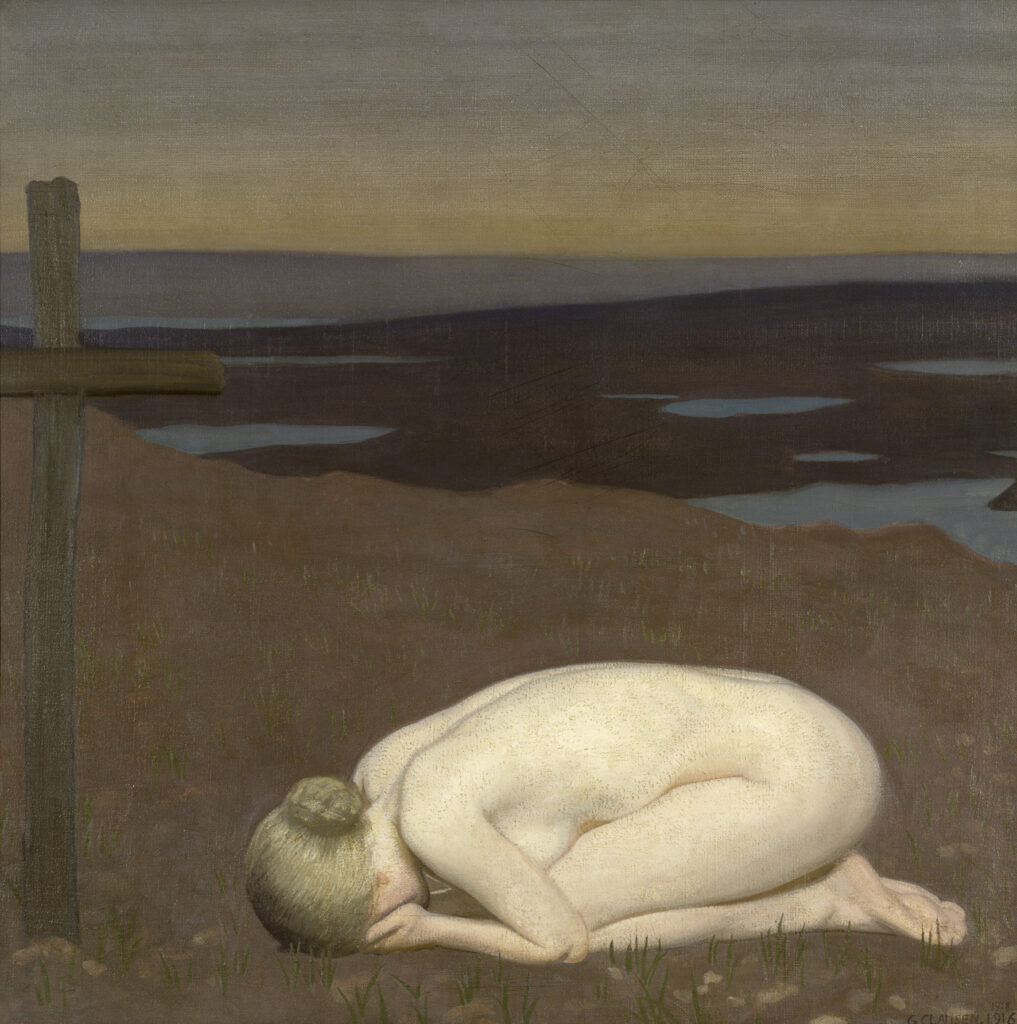
Youth Mourning by George Clausen (18 April 1852 – 22 November 1944)
A young woman representing youth kneels in front of a wooden cross marking a grave. In the background is the battlefield where holes in the ground caused by bombs are filled with water.
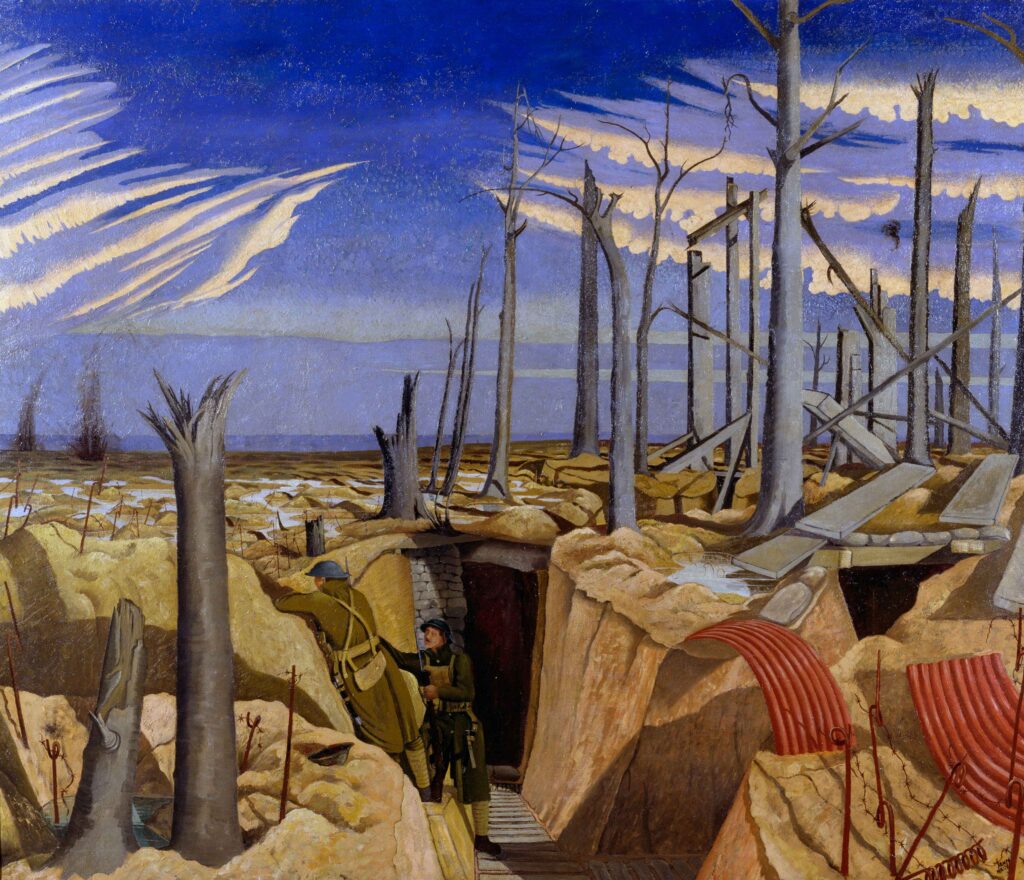
Bombs have destroyed a beautiful forest. A soldier looks out at the destruction, mud and snow. Above, and in contrast, there is a beautiful blue sky.
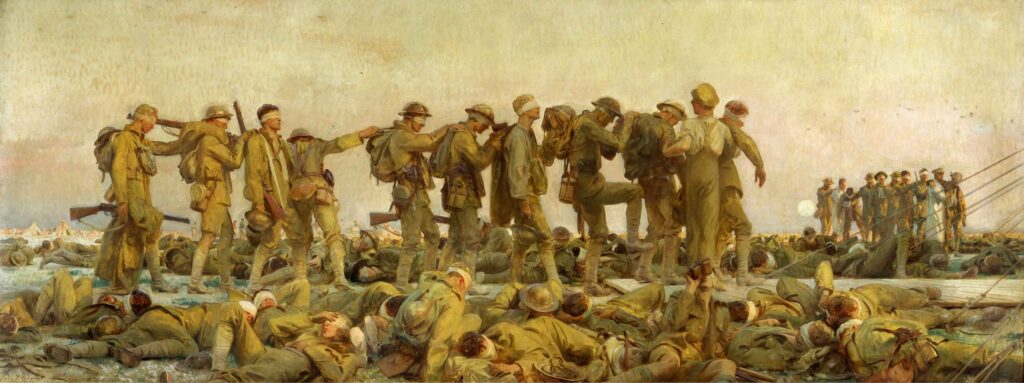
The British soldiers’ eyes are bandaged because they have been exposed to mustard gas. Each soldier holds the shoulder of the man in front as they are guided to the medical station. Mustard gas was first used against the British army in 1917. This terrible gas had little smell. If you inhaled it, the gas took about 12 hours to have any effect. Your skin would start to blister, your eyes became sore and you would begin to be sick. Eventually, breathing would become very difficult and you would die about five weeks after breathing in the gas.
Paintings Courtesy of IWM (Imperial War Museum)
Vietnam: The Art of War:
QUESTION:
VOCABULARY: