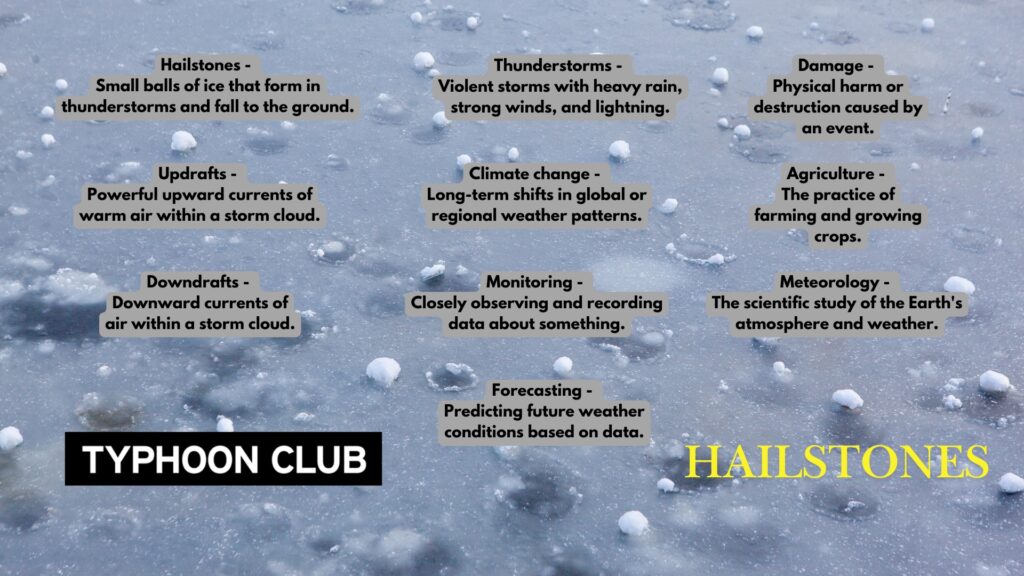

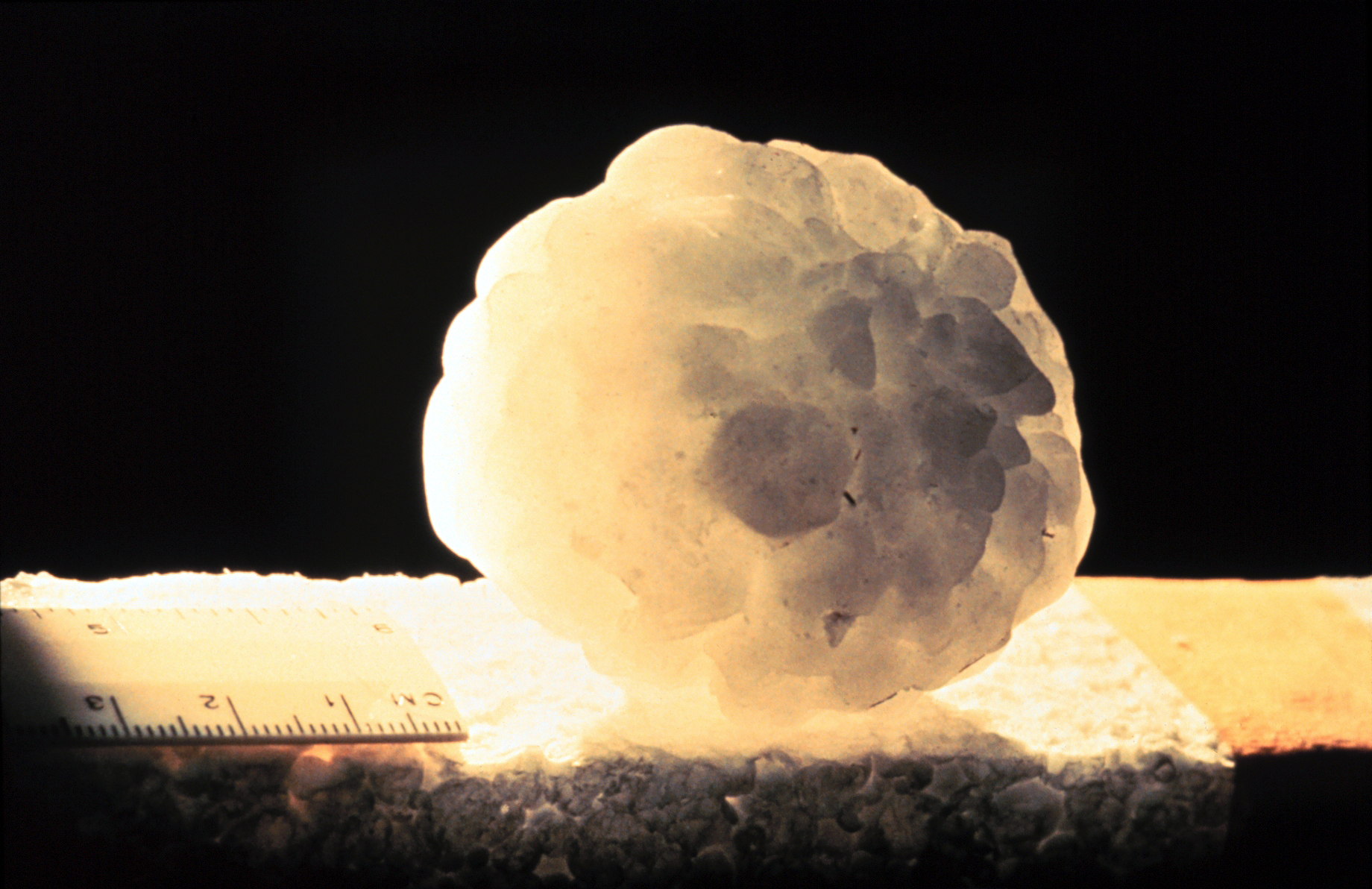
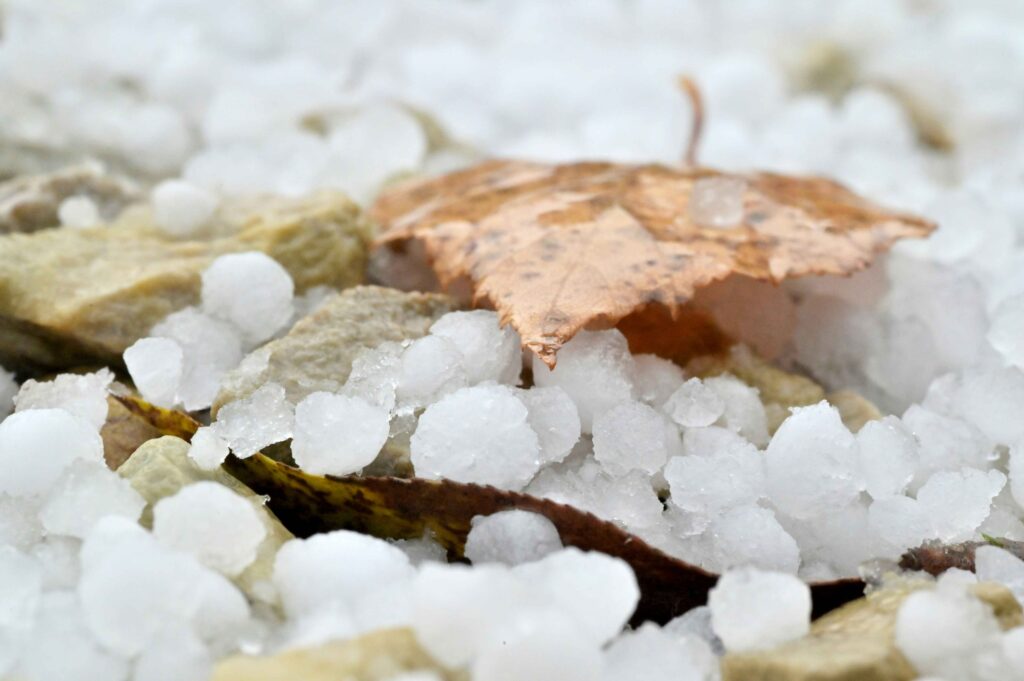
Hailstones are small balls of ice that form during thunderstorms and then fall to the ground. They are created when strong updrafts of warm air carry water droplets high up into the colder upper regions of a storm cloud. As these water droplets freeze, they form tiny balls of ice that then get swept back down by the downdrafts within the cloud.
The concept of hail has been discussed for centuries. Some of the earliest known references to hail date back to ancient civilisations in places like China, Greece and Rome. The ancient Greek philosopher Aristotle provided one of the earliest written accounts of hail in his work “Meteorology” around 350 BC, correctly describing how hailstones are formed from frozen raindrops.
Since these early observations, our scientific understanding of hailstone formation has improved greatly. We now know that hailstones grow larger as they are repeatedly lifted up and down within the storm cloud, adding layer upon layer of ice. The largest hailstones can eventually reach the size of grapefruits or even baseballs before becoming too heavy to be supported by the storm’s updrafts and falling to the ground.
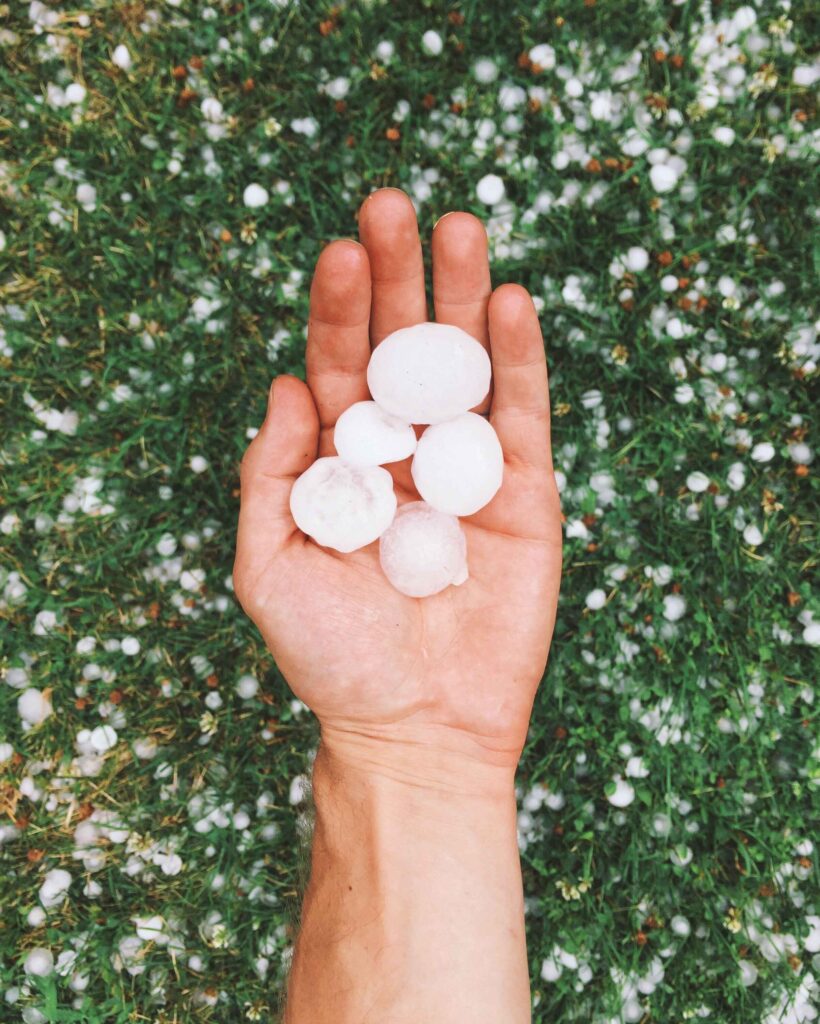
But is the size of hailstones actually increasing over time? This is a topic that meteorologists are still debating. Some studies have suggested that the maximum size of recorded hailstones has grown larger in recent decades, with stones over 15 cm in diameter being reported more often. This could be linked to climate change, as warmer temperatures may be providing more moisture and energy to fuel the powerful updrafts needed to grow extra-large hail.
However, other researchers argue that the apparent increase in hailstone size may simply be due to more extensive monitoring and reporting, rather than an actual physical change. Reliable historical data on hailstone dimensions is scarce, making it difficult to determine long-term trends with certainty.
Nonetheless, the potential for hailstorms to produce ever-larger and more destructive stones remains a serious concern.
Hail can cause significant damage to property, vehicles, and crops, emphasising the importance of further research and improved forecasting to help communities prepare for and cope with these powerful meteorological events.
How does hail form?
QUESTION:
VOCABULARY: