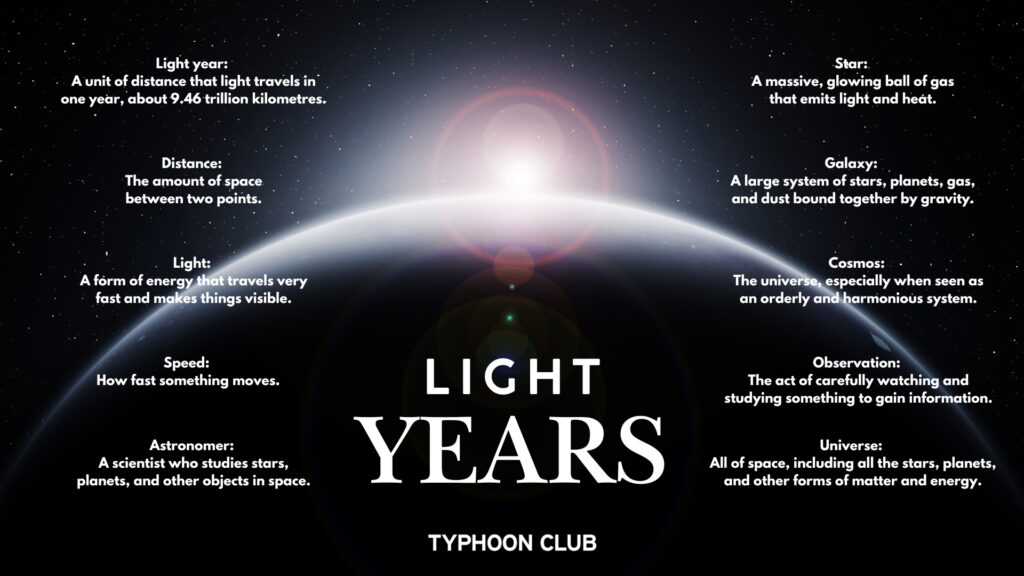

When we talk about the universe, distances become mind-bogglingly large. To make sense of these vast spaces, astronomers use a special unit called a light year. But what exactly is a light year, and how did we come up with this idea?
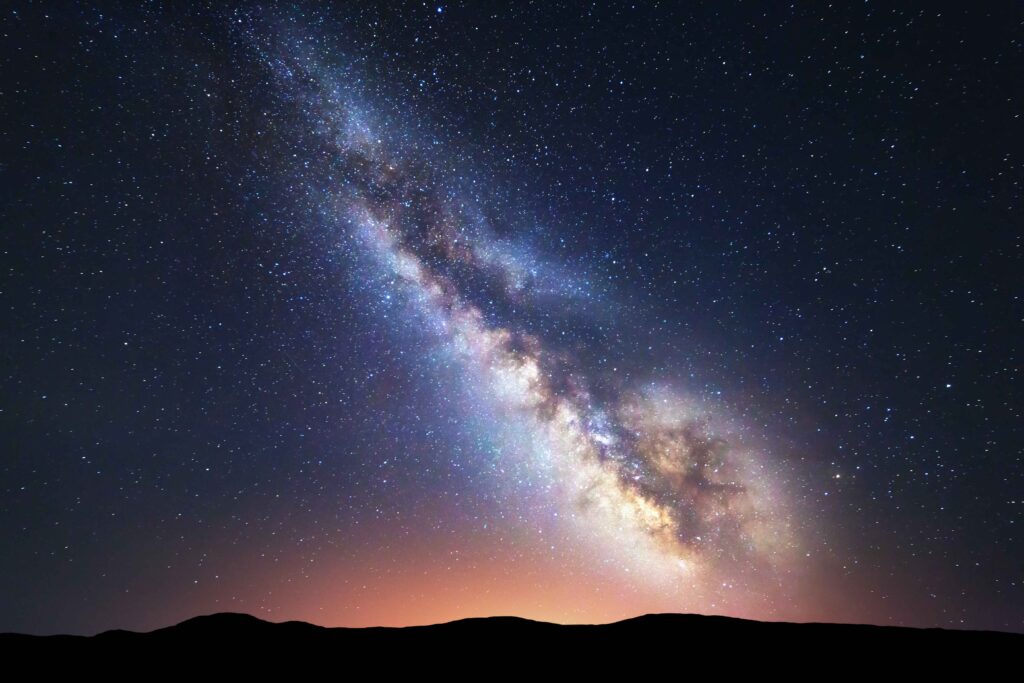
A light year is a way to measure distance, not time. It tells us how far light travels in one year. Light moves incredibly fast at about 299,792 kilometres per second (or around 186,282 miles per second). Over a year, this speed means light travels about 9.46 trillion kilometres, or about 5.88 trillion miles. Using such a huge number helps scientists describe the massive distances in space.

The concept of the light year is tied to our understanding of light’s speed. In 1676, Danish astronomer Ole Rømer (left) made the first estimate of light’s speed by studying Jupiter’s moon Io – the closest moon to the planet. He noticed that the times between Io’s eclipses changed depending on how far Earth was from Jupiter. From this, he figured out that light took time to travel the distance, estimating its speed at about 220,000 kilometres per second. Although not exact, it was a significant step forward.
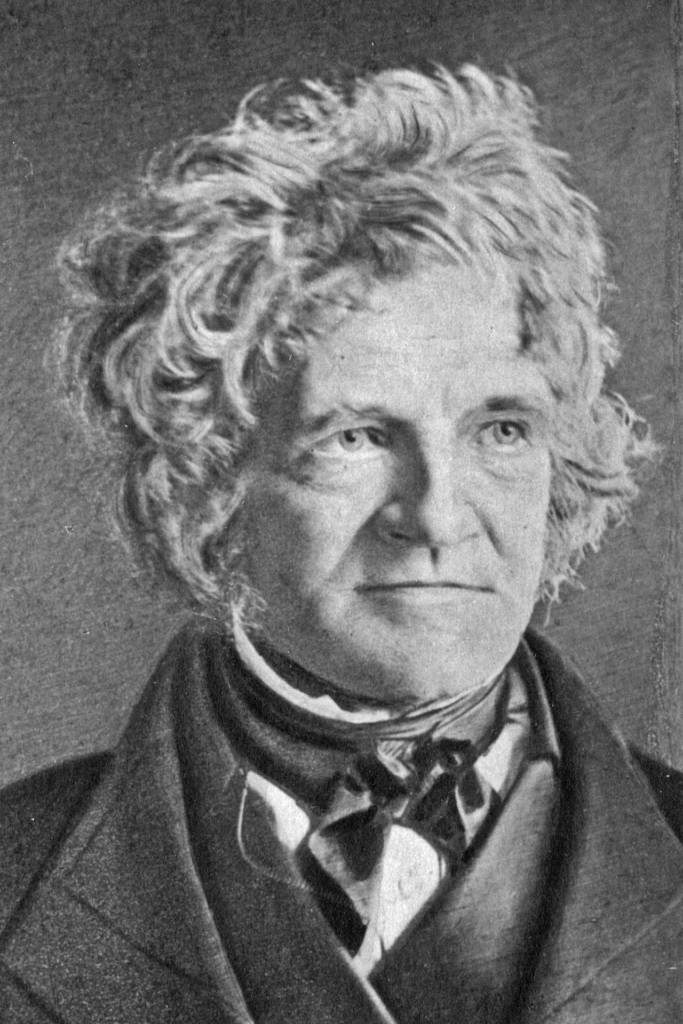
The term “light year” itself became more common in the 19th century. In 1838, German physicist Friedrich Wilhelm Bessel measured the distance to the star 61 Cygni using a method called parallax. While Bessel didn’t use the term “light year,” his work helped set the stage for its adoption. The term became widely used in the 20th century as astronomers needed an easier way to talk about the vast spaces between stars and galaxies.
Using light years makes it easier to understand and communicate these huge distances. For example, the nearest star to our solar system, Proxima Centauri, is about 4.24 light years away. This means light from Proxima Centauri takes just over four years to reach us.
Interestingly, using light years also means we’re looking back in time. When we see a star that is 1,000 light years away, we’re seeing it as it was 1,000 years ago, because its light took that long to reach us.
Light Years with the World of Science:
QUESTION:
VOCABULARY: