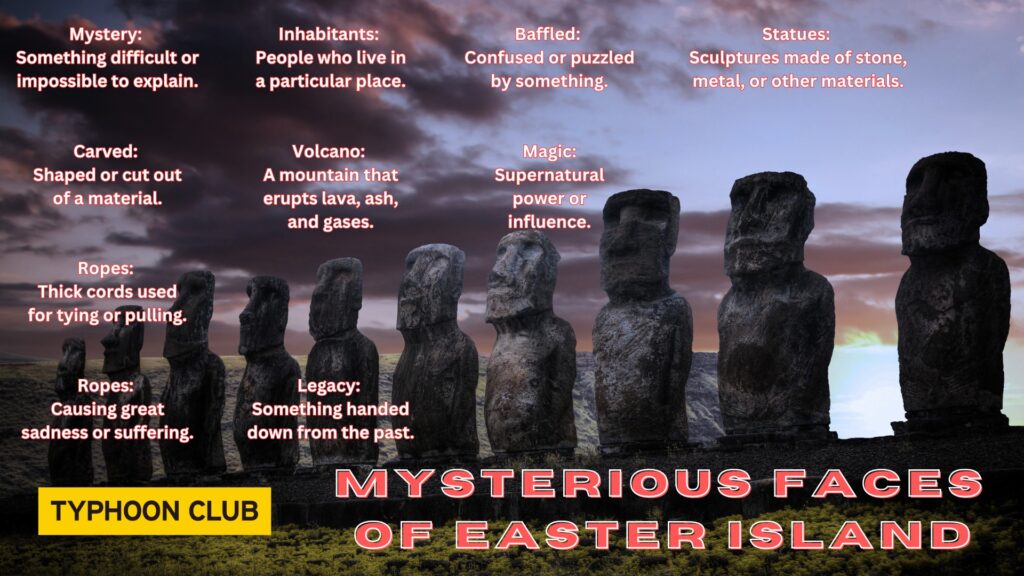
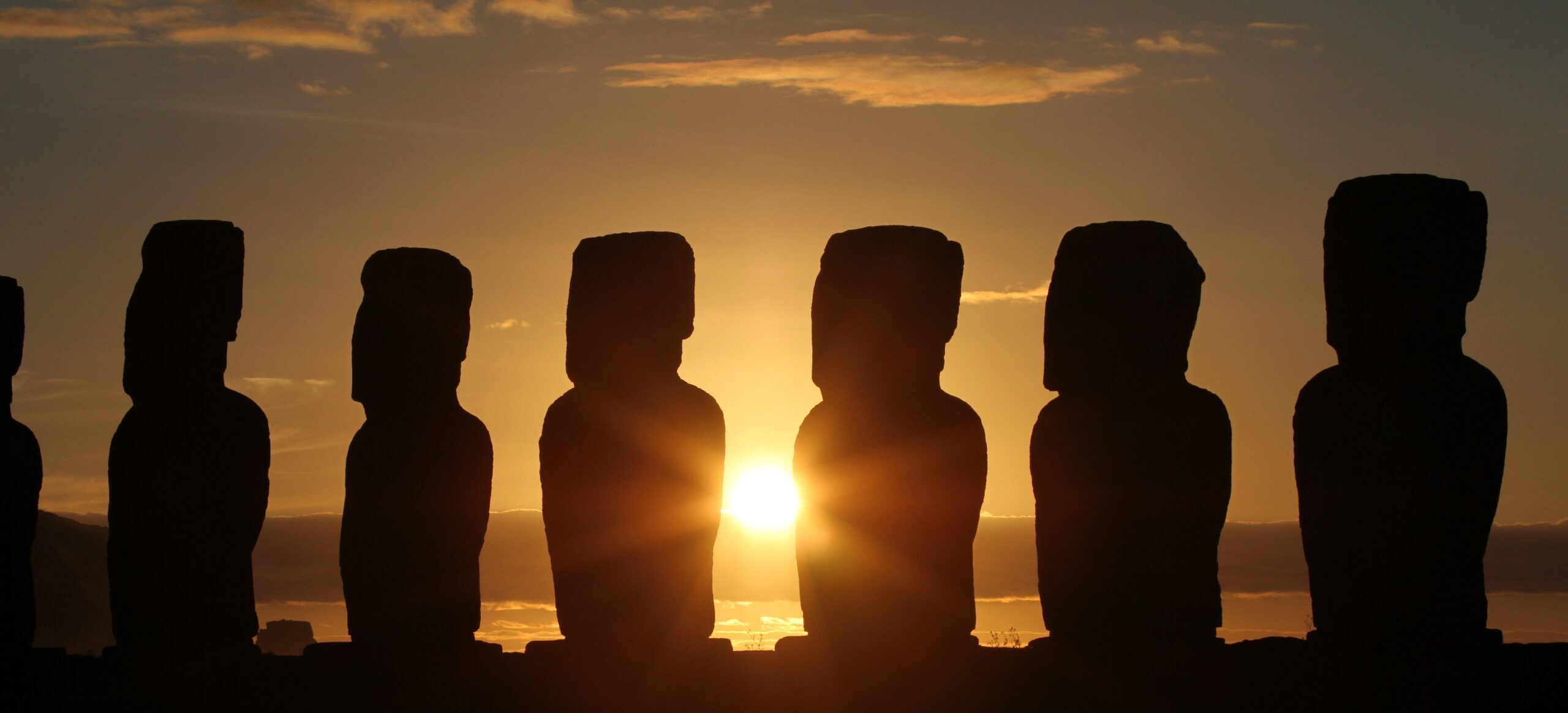
Easter Island, also known as Rapa Nui, is a remote island situated in the vast Pacific Ocean. Despite its isolation, the island is home to an unusual puzzle that has kept experts guessing for centuries.
Easter Island, or Rapa Nui as the local inhabitants call it, sits all alone in the south-eastern Pacific Ocean. It really is miles from anywhere, yet it is home to a mystery that has baffled experts for hundreds of years. Scattered around the island are 887 statues nine metres high, each weighing 80 tons. The islanders call them Moai – pronounced Mo-i. They are huge, yet no-one knows how they got there.
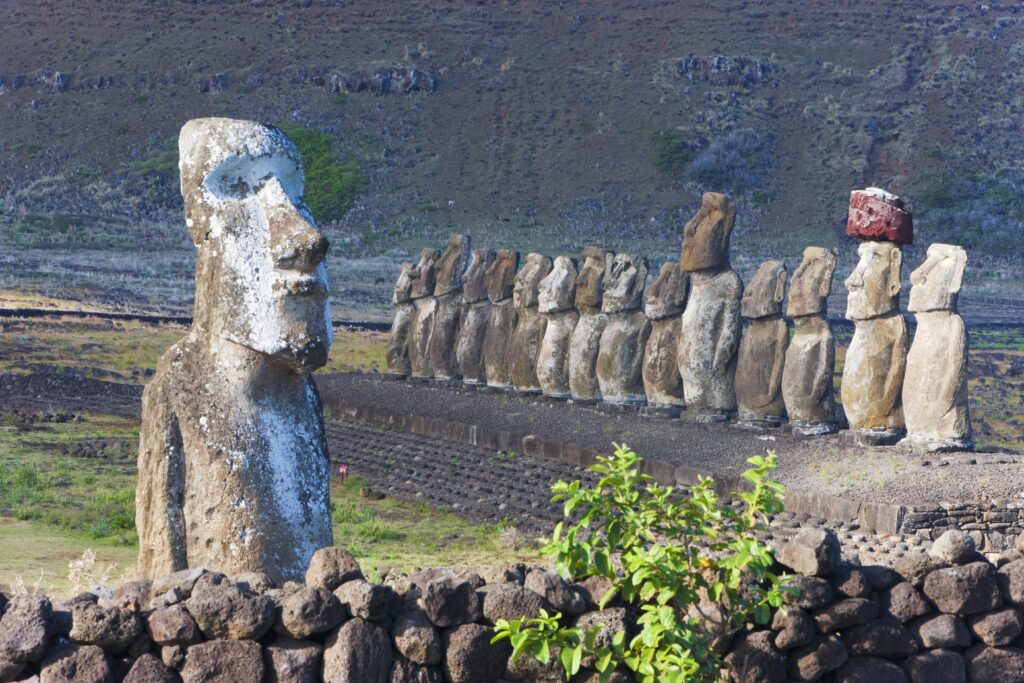
The Dutch explorer, Jacob Roggeveen, gave the island its name in 1722 because he discovered it on Easter Sunday. At that time, the island had a population of no more than 3,000. None of them could explain how the statues got there. Perhaps they came from outer space? As time went by, it was proved that the statues had been carved from rock taken from a volcano located on the northeast of the island. Aliens were not involved! They had been carved at some time between the 13th and 15th centuries.
There were old stories passed from parents to children that the statues once walked with the help of magic. Experts began to think carefully about this. They found that if ropes were tied around a statue, it was possible to move it and make it look as if it walked.
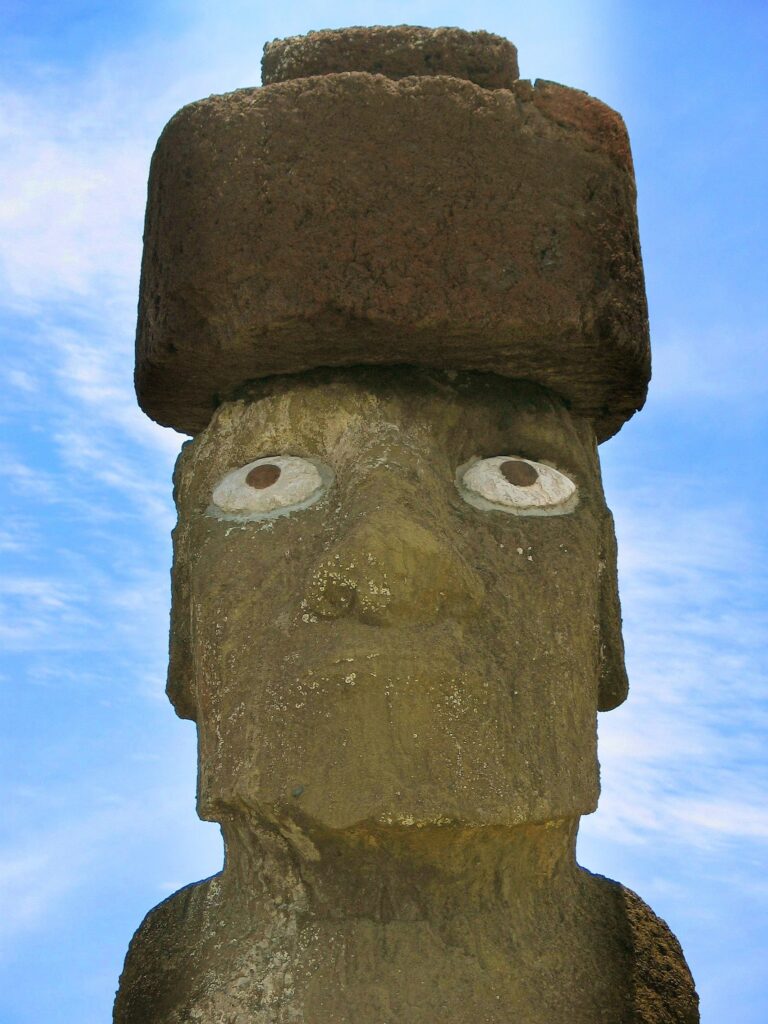
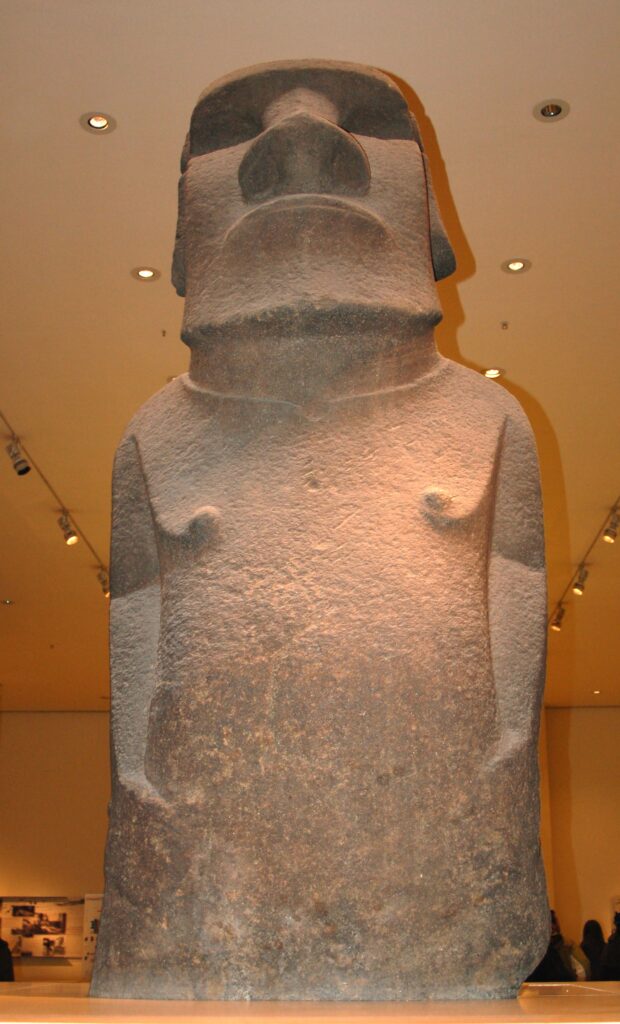
As late as 2012, it was discovered that the giant heads also had bodies that were hidden beneath the ground. The heads only make up 3/8ths of the statue size! The big question was: how could such a tiny island with such a small population build so many large statues and place them all around the island?
Experts began to think that maybe many more people used to live on the island. Perhaps as many as 17,500. Large areas of land must have been cleared to allow them to move the statues. If this happened, perhaps they could no longer grow enough food on the cleared areas of land and the inhabitants died?
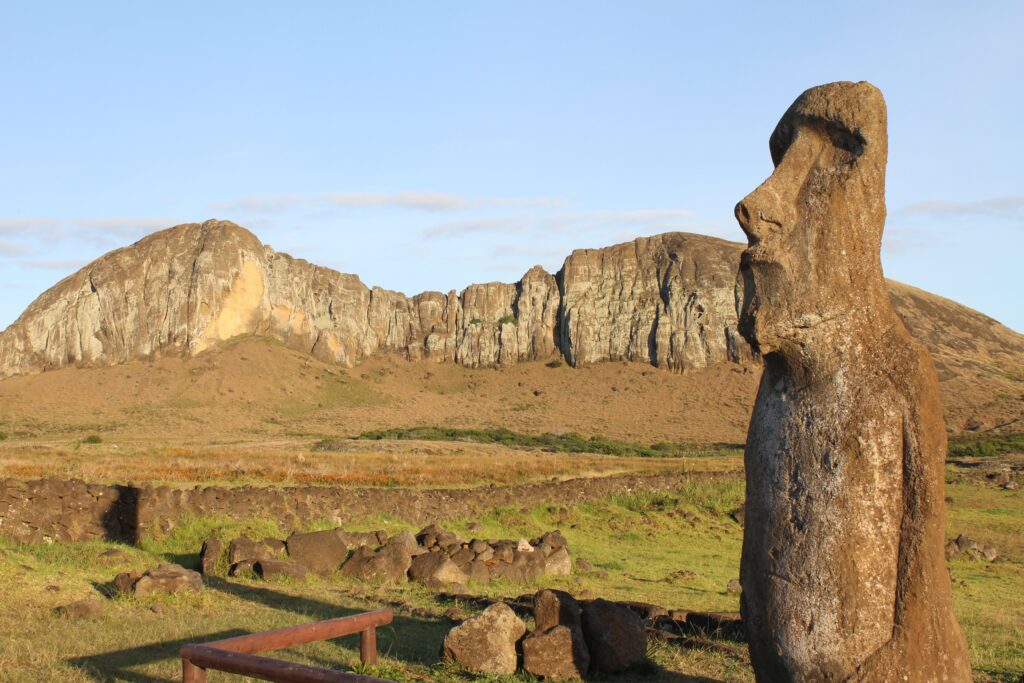
A second answer was then suggested; one as equally unpleasant as the first. Once the Europeans discovered Easter Island in the 18th century, slave traders began visiting the island and took large numbers of its inhabitants as slaves.
Both theories are tragic and sad. But the legacy of these incredible people lives on through the statues. Today, 6,000 people live on Easter Island. Many tourists take the six hour flight from Chile to visit. It’s a very beautiful, isolated yet mysterious place. Well worth a visit one day.
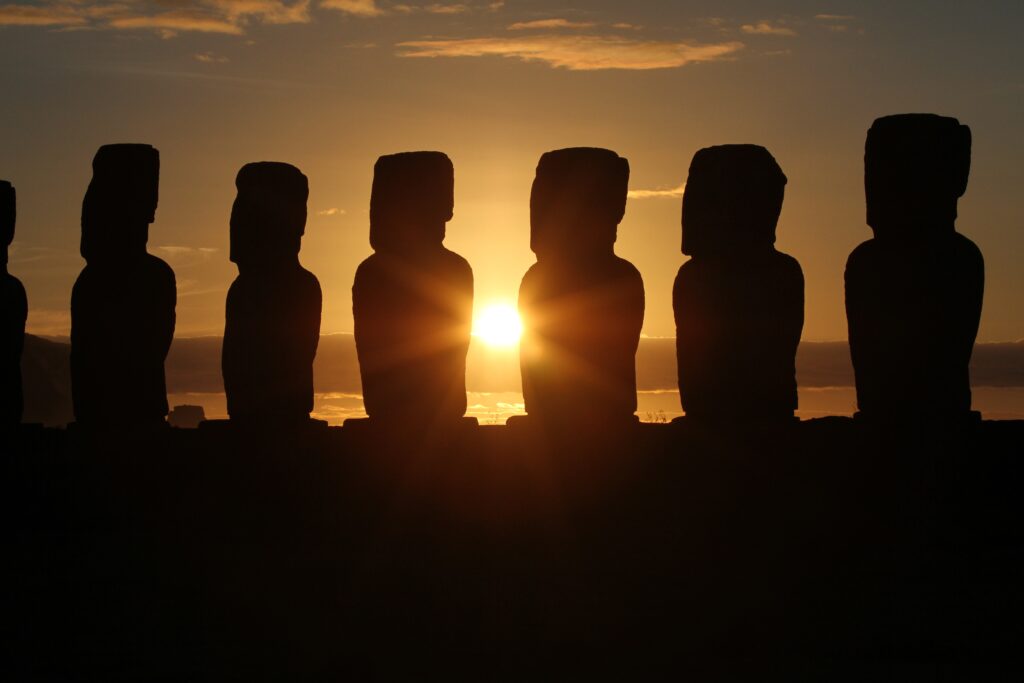
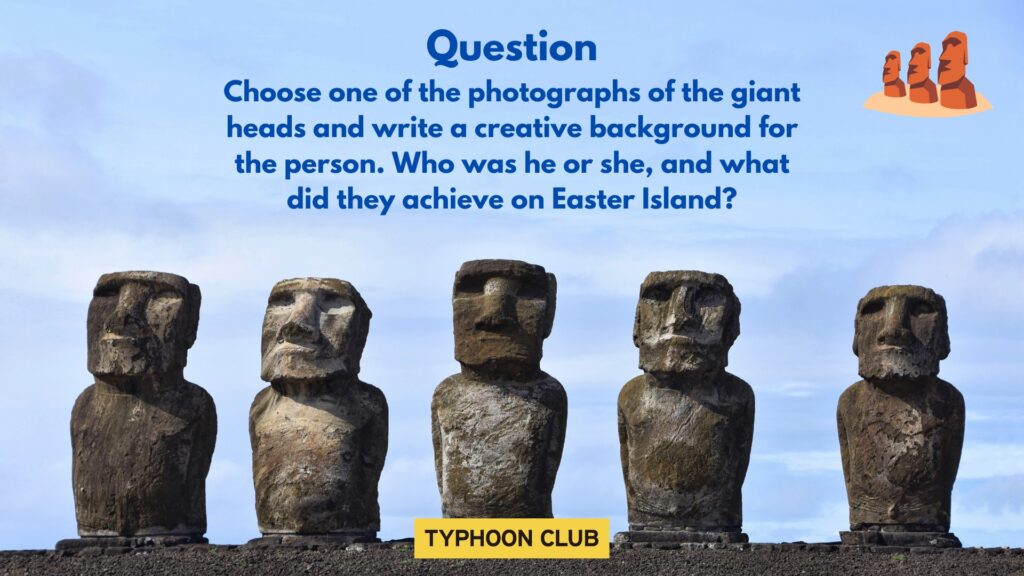
Question:
VIDEO: Take a visit and explore Easter Island!
VOCABULARY